Honda Africa Twin 1100 on the road: a real-world test of the sport-touring that doesn't want to be a trail bike
We tested the Honda Africa Twin 1100 on pure tarmac: real-world fuel consumption, ergonomics at 130 km/h and handling dynamics. Can it replace a proper sport-touring bike?
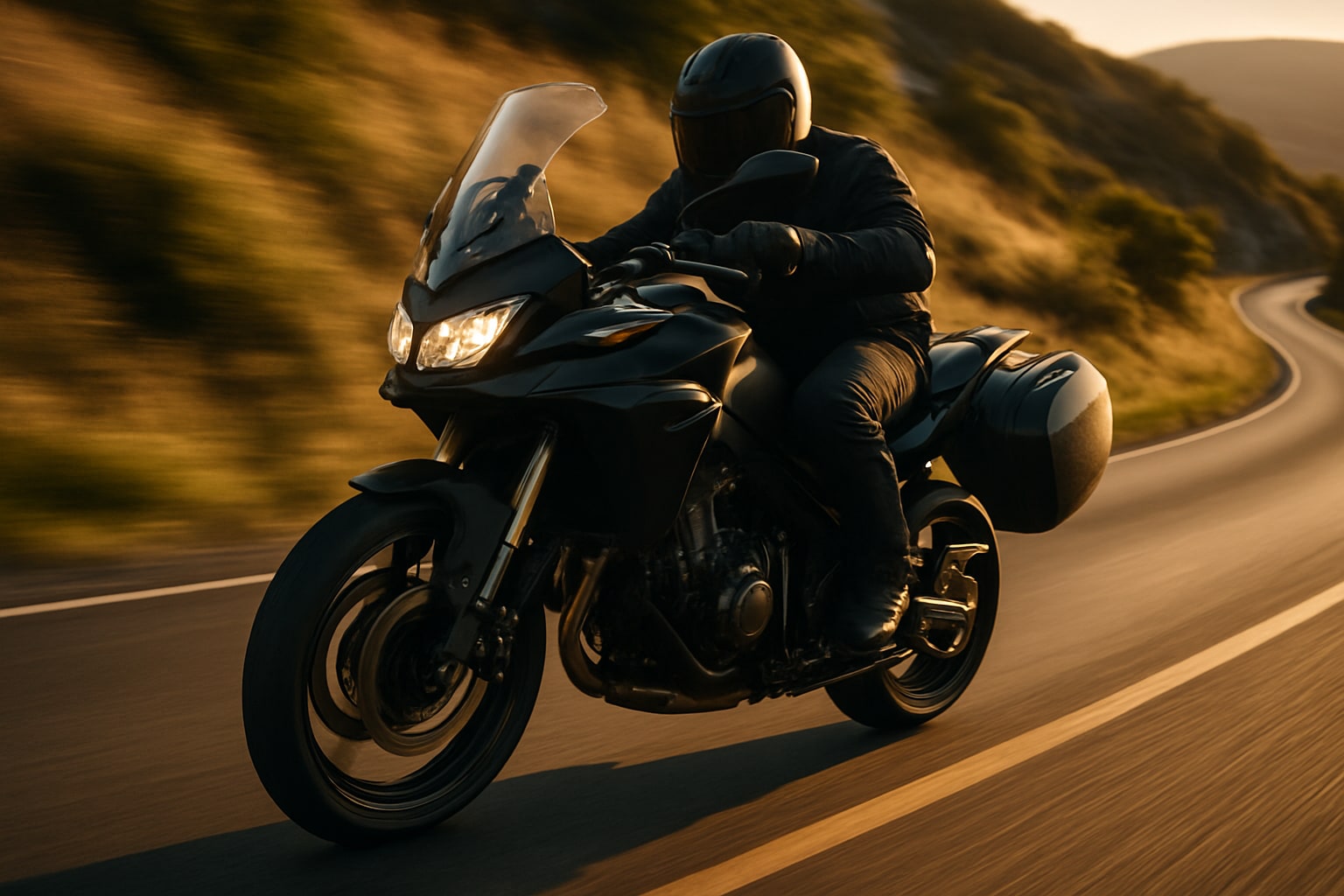
Why the Africa Twin 1100 makes more sense on the road than it seems
There’s a popular notion among riders: the Honda Africa Twin is a trail bike for riding to Morocco. And it can be. But after covering 1,400 km, almost all of it on asphalt, with motorway stretches, fast bends and city traffic, the conclusion is different: the CRF1100L works as a covert sport-tourer better than its styling suggests. That’s the angle of this test.
1,100 twin engine: low-end torque and elasticity
The 1,084 cc parallel twin with a 270° crankshaft delivers 102 hp (75 kW) at 7,500 rpm and 105 Nm at 5,500 rpm. On paper it doesn’t impress next to an S 1000 XR or a Multistrada, but on open roads the torque arrives early and the top gear doesn’t force constant downshifting.
- At a real 120 km/h in sixth, the engine turns at around 4,000 rpm with plenty of headroom for overtaking without downshifting.
- Throttle response is smooth in Tour mode; in Sport it becomes somewhat abrupt at low revs.
- Vibrations are contained up to 6,500 rpm; beyond that they reach the handlebars and footpegs, though never bothersome on a long stretch.
The DCT version (optional, about €1,000 more) performs well on the road: in D mode it doesn’t rev high and shifts up early; in S it holds the gear through corners. On mountain passes the manual control with the paddles is appreciated.
Real-world fuel consumption and range of the Africa Twin 1100
This is where the Africa Twin gets serious as a touring bike:
- Real average consumption during the test: 4.9 l/100 km riding between 110 and 130 km/h.
- WLTP homologated by Honda: 4.9 l/100 km (matches).
- Standard tank: 18.8 litres. Adventure Sports: 24.8 litres.
With the Adventure Sports you get a real 500 km between refuelling stops without pushing it. Few pure sport-tourers offer that without running on reserve.
Ergonomics on the motorway and on mountain passes
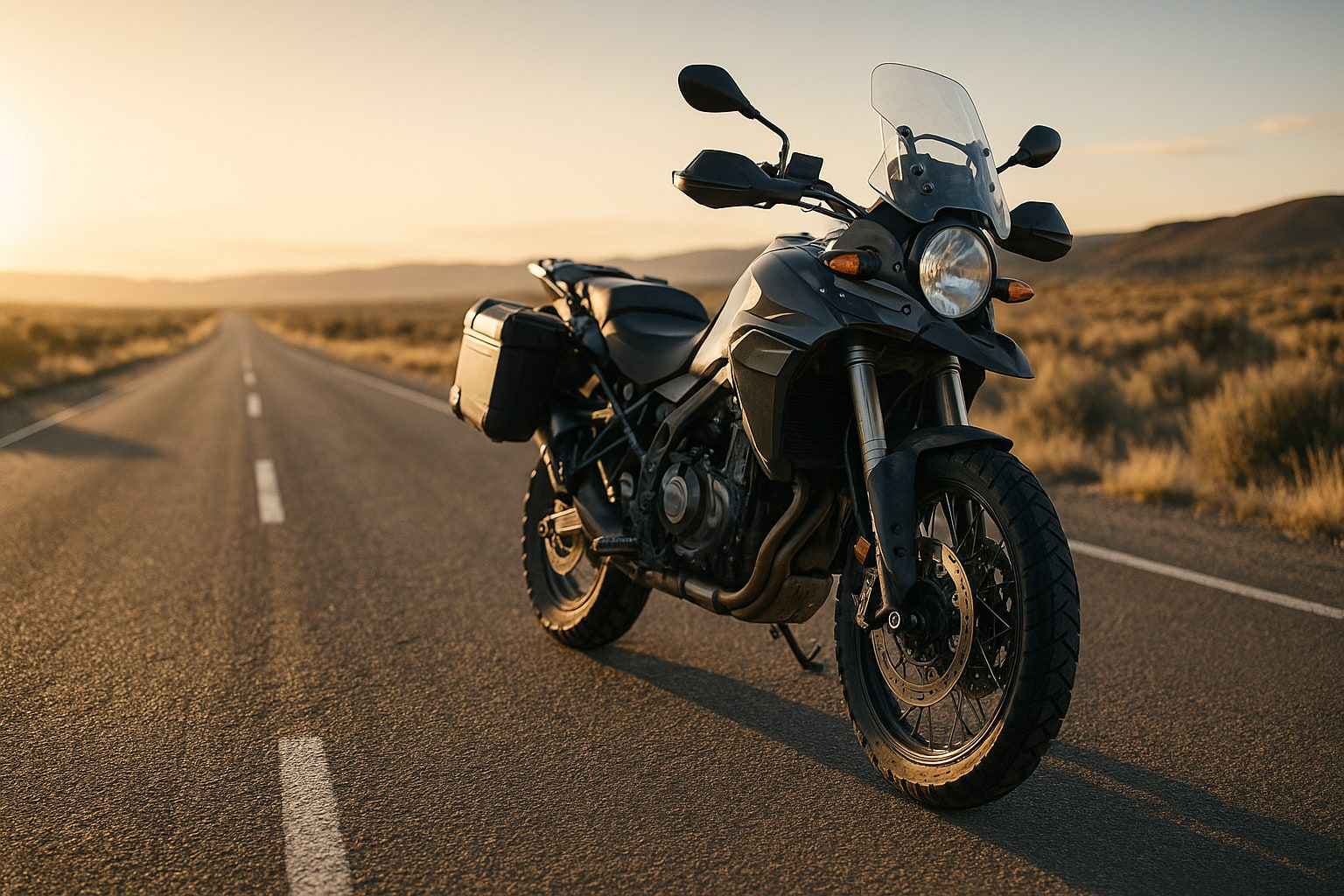
The seat height ranges from 850 to 870 mm on the standard version and 835 to 875 mm on the Adventure Sports with the low seat. It is still a tall bike: if you’re under 1.75 m, you’ll be on your tiptoes. Kerb weight: 238 kg (Adventure Sports DCT rises to 253 kg). You feel it when stationary, but on the move it disappears thanks to the low centre of gravity.
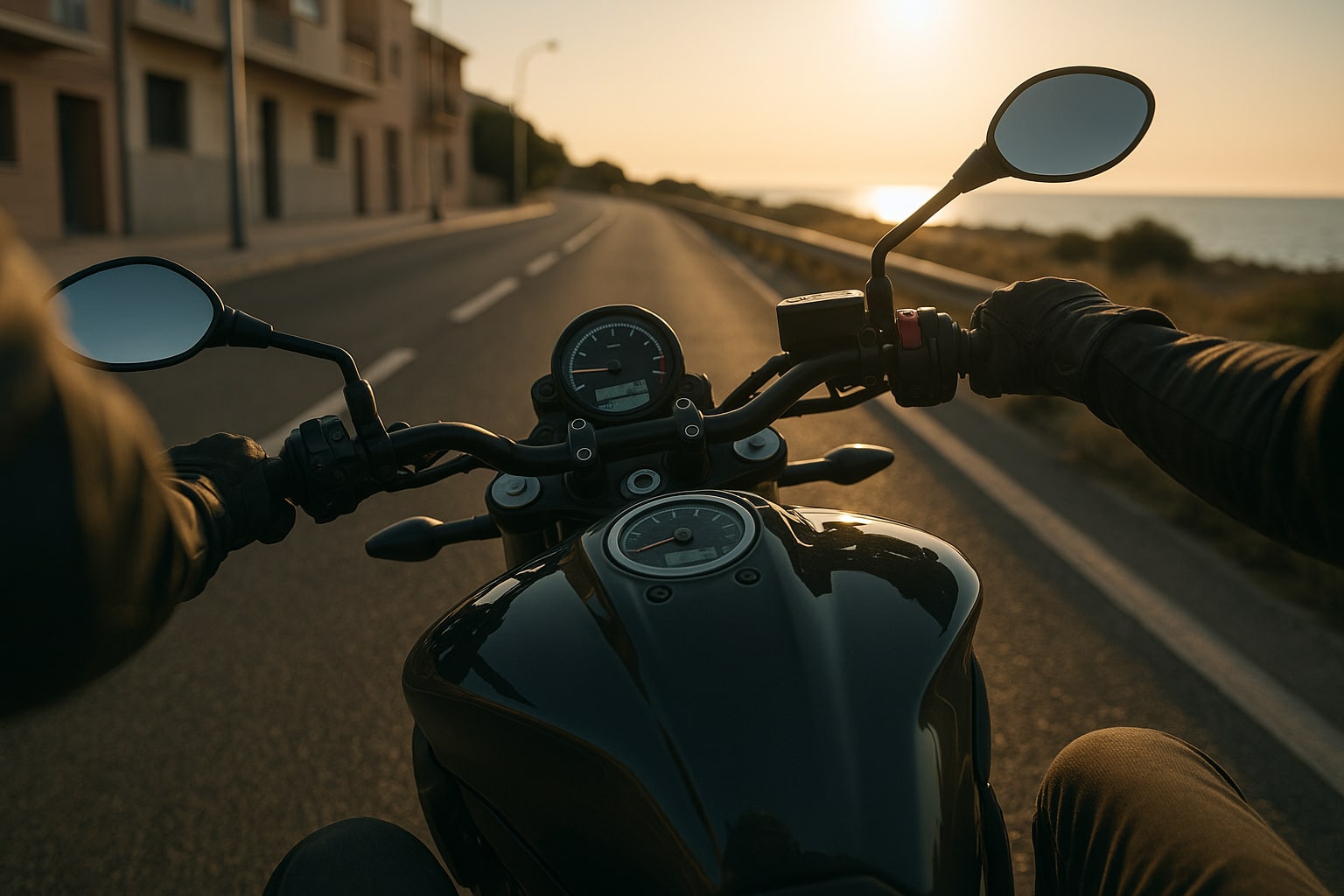
The riding position is upright, with a wide handlebar and forward-set footpegs. At 130 km/h the manually adjustable windscreen on the Adventure Sports does its job up to 1.80 m in height; above that, turbulence hits the helmet. On mountain passes the bike handles better than expected for 238 kg: it’s not an S 1000 XR, but it changes direction with nobility.
Suspension and handling dynamics on tarmac
- Standard: 45 mm Showa inverted fork, adjustable for preload, compression and rebound. 230 mm of travel at the front.
- Adventure Sports ES: Showa EERA semi-active with four modes and electronically adjusted preload.
On fast tarmac, the standard suspension dives somewhat under hard braking due to its long travel. The EERA solves this by stiffening up in Tour/Sport mode, and this is where the sport-touring character truly shows. In linked corners, the bike prefers tyres with less aggressive tread: with the standard Bridgestone Battlax A41 it’s more than adequate; with dual-purpose tyres like the Anakee Adventure it loses precision when leaning over.
Electronics and equipment
Honda has fitted what’s needed:
- 6-axis IMU as standard.
- Cornering ABS and HSTC traction control with 7 levels + off.
- Riding modes: Tour, Urban, Gravel, Off-Road and 2 customisable.
- Engine torque control, wheelie control, downhill assist.
- 6.5″ touchscreen TFT dash with Apple CarPlay and Android Auto as standard.
- Cruise control as standard.
- Quick-shifter: not available (the DCT doesn’t need it; on the manual, a notable absence).
- LED headlights with cornering light as standard on the Adventure Sports.
What’s missing: a quick-shifter on the manual version and the semi-active suspension reserved for the top variant. Connectivity is among the best in the segment, with CarPlay working well via Bluetooth and headset.
Price, versions and rivals
Approximate RRP for the Honda in Spain (2024 list):
- Africa Twin standard manual: €16,400
- Africa Twin DCT: €17,400
- Adventure Sports ES DCT: €20,500
It rises by about €500–700 over the previous generation, something to keep in mind. Requires an A licence; there is no homologated A2 version. 2-year warranty with no mileage limit.
Direct rivals if you’re looking for a tarmac-oriented trail bike:
- Suzuki V-Strom 1050DE: cheaper, less premium electronics.
- Yamaha Tracer 9 GT+: pure sport-tourer, more agile, less range and a less comfortable riding position over the long term.
- BMW F 900 GS Adventure: lighter, less elastic engine.
Verdict: who is the Africa Twin 1100 worth it for on the road?
It suits the rider who covers 15,000–20,000 km a year, mostly on asphalt, with the occasional easy off-road track and long trips with a partner or luggage. The combination of 500 km of range, comfortable riding position, complete electronics and moderate consumption makes it a de facto sport-tourer with the advantage of being able to leave the tarmac whenever you want.
It isn’t worth it for those seeking sporty punch (a Tracer 9 GT+ will give more fun for less money), nor for anyone under 1.70 m who doesn’t want to wrestle with the seat at every traffic light. Nor is it the choice if you plan serious off-road riding: its 238–253 kg weight makes itself felt as soon as the terrain gets tricky.
As a trail bike that lives on the road and goes off it at weekends, it has few arguments against it beyond the price of the Adventure Sports ES DCT, which is dangerously close to €21,000.
Technical data: official Honda website for Spain. Consumption figures and dynamic evaluations: own test over 1,400 km.
0 comments · Comment