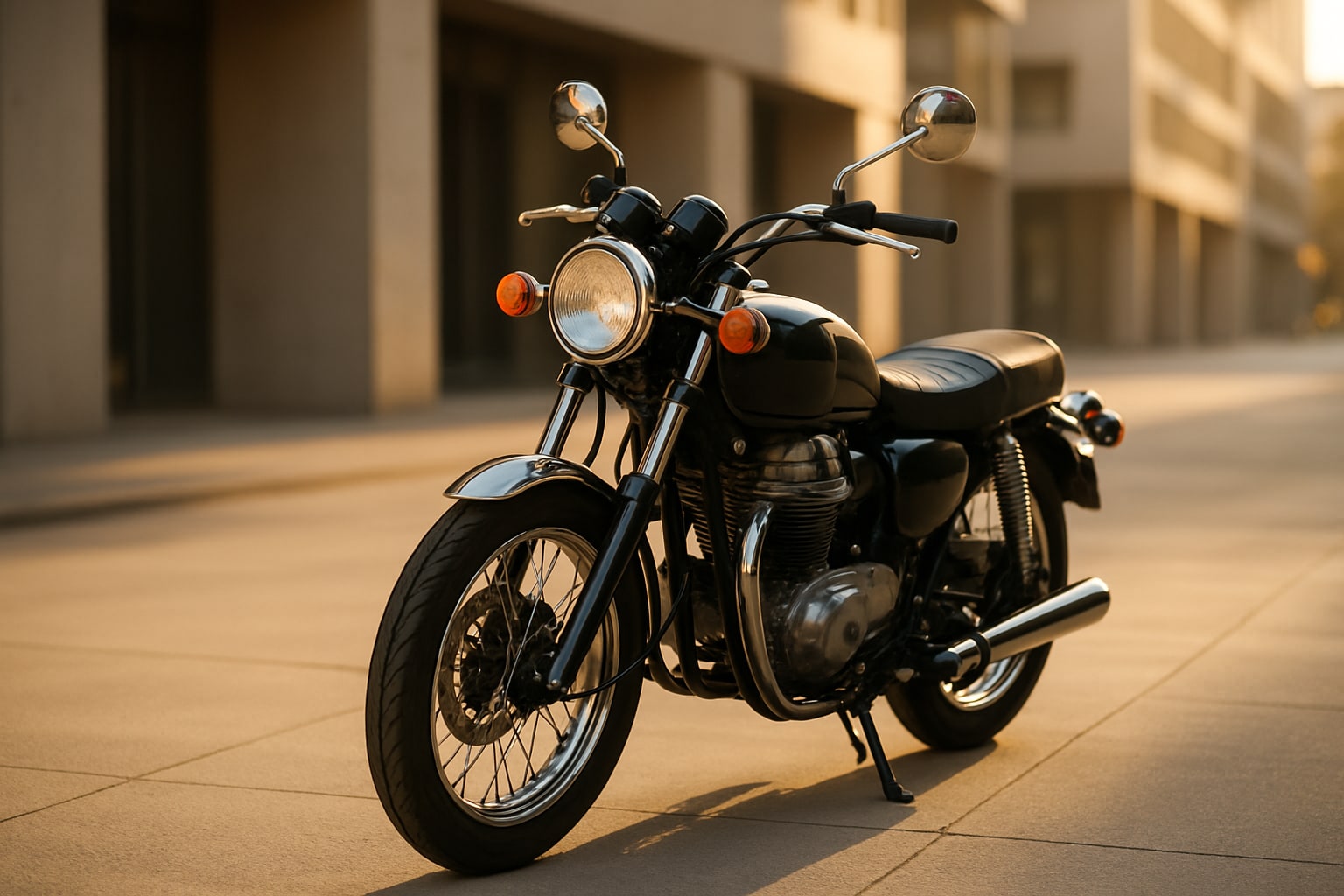
Honda CMX1100 Rebel DCT: the Japanese cruiser that doesn't need to look American
We analyze the Honda CMX1100 Rebel DCT, the only large-displacement cruiser with a dual-clutch transmission. Engine from the Africa Twin, 87 hp and a very Japanese approach compared with Harley-Davidson and Indian.
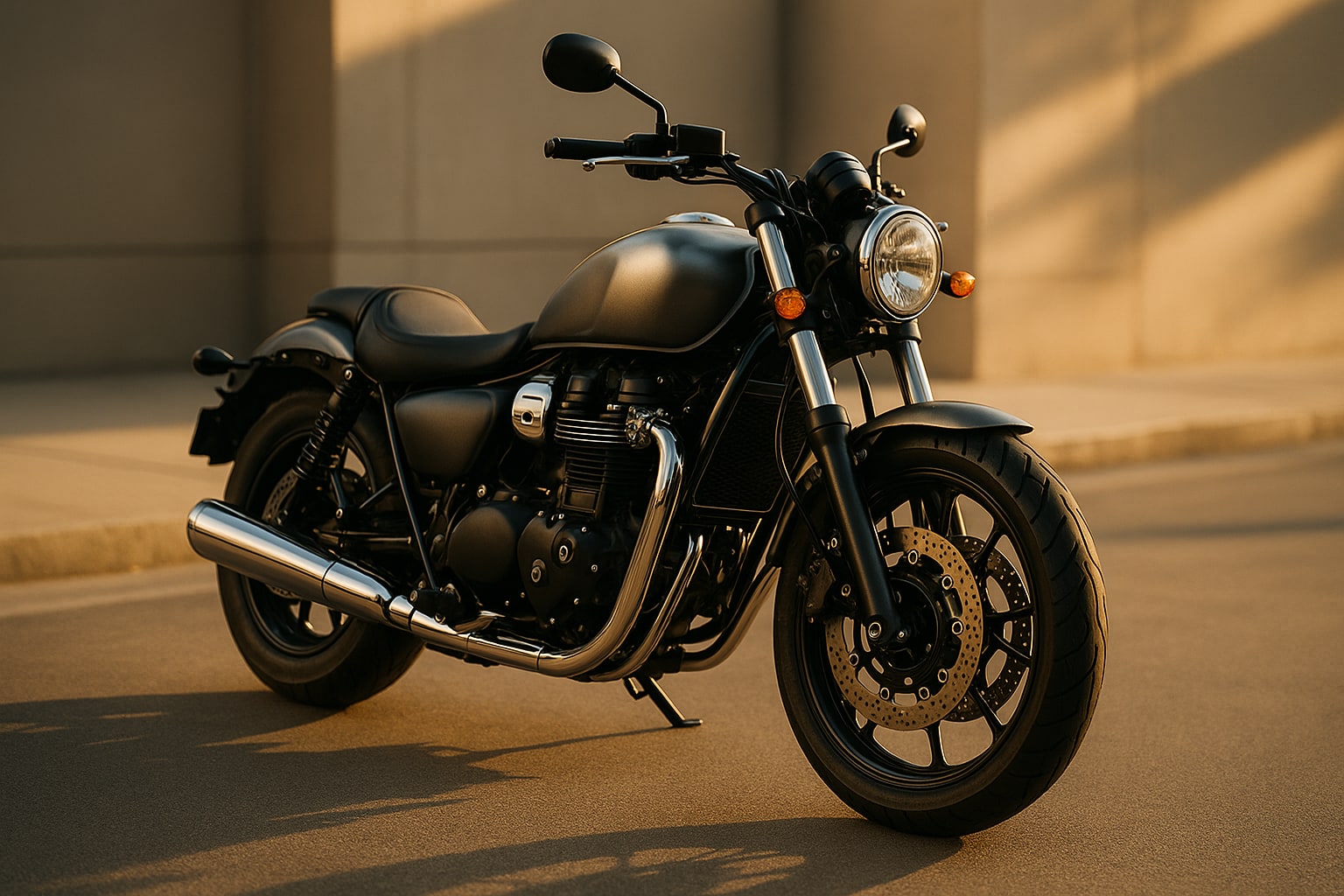
A cruiser that breaks the mold without shouting about it
The word “cruiser” almost instinctively makes you think of an American V-twin, chrome and an idle that makes the mirrors vibrate. The Honda CMX1100 Rebel DCT doesn’t play that game. It is a cruiser built in Kumamoto that embraces its Japanese origin and turns it into an argument: proven reliability, technology inherited from the Africa Twin and, above all, a dual-clutch automatic transmission that has no direct rival in this segment.
It isn’t a motorcycle for everyone, and that is precisely why it is worth discussing calmly. It is neither a cheap Harley nor does it pretend to be one. It is something else.
Africa Twin parallel-twin engine: 1,084 cc and 87 hp
The heart of the Rebel 1100 is the same 1,084 cc parallel twin fitted to the CRF1100L Africa Twin, although here Honda has reprogrammed it to deliver its power low down. We are talking about 87 hp (64 kW) at 7,000 rpm and a maximum torque of 98 Nm at 4,750 rpm. These are not outrageous figures on paper, but on a cruiser what matters is how that torque arrives, and here it arrives early and in a very linear way.
The crankshaft with an irregular firing interval (Unicam, 270 degrees) gives it a character similar to a V-twin: pronounced pulses, a sound with personality and traction you appreciate when you open the throttle leaving an urban roundabout. It doesn’t vibrate like a Harley Sportster, but it isn’t sterile either.
The DCT: the differentiating argument
Here is the real headline. The Honda CMX1100 Rebel DCT is, today, the only cruiser over 1,000 cc with dual-clutch transmission on the market. Neither Harley-Davidson, nor Indian, nor Kawasaki with the Vulcan offers anything equivalent.
The DCT works in two automatic modes (D for economy, S with three levels for more spirited riding) and also in manual with paddle shifters on the handlebar. In the city is where it shines: forgetting about the clutch in traffic jams with a 223 kg motorcycle changes the experience. On open roads, S2 or S3 mode holds gears right where the engine pulls best.
The downsides? Yes, there are some. The system adds about 10 kg compared with the manual-gearbox version and, if you come from conventional motorcycles, the first few kilometers will throw you off as you reach for a left-hand lever that isn’t there. If you’re looking for the ritual of working the clutch, this is not your motorcycle. If you’re happy without that ritual, it is a liberation.
Ergonomics, chassis and handling
The riding position is pure cruiser: forward-set footpegs, wide and low handlebars, seat height of 700 mm. That height makes it especially accessible for riders of average or short stature, and the weight is kept very contained. The 13.6-litre fuel tank is adequate, and with real consumption of between 5.2 and 5.8 l/100 km (Honda homologates 4.9 l/100 km WLTP) it gives you a practical range of about 230-240 km before the reserve light comes on.
The tubular steel chassis doesn’t aim for radicalism. Conventional non-adjustable 43 mm front fork and twin Showa rear shocks with preload adjustment. It works well on smooth asphalt, but over successive bumps or on potholed secondary roads the short rear travel shows. It is the classic compromise of this kind of motorcycle, not a surprise.
In corners it lets itself be led with more ease than expected thanks to a low centre of gravity, although the footpegs scrape early if you ride hard. It is not a sports naked like the Street Triple 765 RS, and it doesn’t pretend to be.
Equipment and electronics
Honda has fitted serious electronics, something many rival cruisers still don’t offer:
- Dual-channel ABS as standard (it is not cornering ABS with IMU).
- HSTC traction control with three levels and can be switched off.
- Three riding modes: Standard, Rain and Sport, plus a configurable User mode.
- Cruise control as standard.
- Negative LCD display with complete information (no TFT, and this shows compared with European competitors).
- No app connectivity or integrated navigation: here Honda falls short.
- No quickshifter (with the DCT it makes no sense, but it’s worth clarifying).
- Full LED lighting, USB socket under the seat.
There is no IMU, no semi-active suspension, no TFT. For the price it asks, the TFT and some connectivity should be there. This is the clearest criticism that can be made of the equipment.
Price, warranty and direct rivals
The RRP of the Honda CMX1100 Rebel DCT in Spain is €14,700 (listed August 2026), ex-dealer. The manual-gearbox version starts at €13,700. Honda offers two years of official warranty with no mileage limit and a wide dealer network, which in the cruiser world makes a difference compared with brands with less presence.
Rivals? It depends on what you’re looking for:
- Harley-Davidson Sportster S (1,252 cc, 121 hp, ~€17,500): more power, more brand prestige, no automatic transmission and more expensive maintenance.
- Indian Scout Bobber (1,133 cc, 94 hp, ~€15,900): more classic styling, engine with more character, no equivalent electronics.
- Kawasaki Vulcan S (649 cc, 61 hp, ~€8,500): a different league in displacement and price, but it shares the accessible Japanese philosophy.
On licensing: the Rebel 1100 requires an A licence. Honda homologates a version restricted to A2 (35 kW / 47.5 hp), which makes it a large-displacement cruiser available to those who don’t yet have two years on the A2 licence. It is a real advantage. If you’re looking for more affordable options with that licence, also see our selection of A2 motorcycles for under €6,000.
Verdict: who it suits and who it doesn’t
It suits the adult rider who wants a genuine cruiser but doesn’t subscribe to the American stereotype, the one who rides a lot in the city and values the DCT as a tool (not as a concession), and the one coming from the A2 who wants to step straight up to something with character without drama.
It doesn’t suit the one seeking the vibration and sound of a Milwaukee V-twin, the one who wants long trips with a passenger and luggage (the tank and ergonomics fall short), or the one who demands a TFT and connectivity on a par with a BMW or KTM of similar price.
The Honda CMX1100 Rebel DCT doesn’t revolutionize anything, but it fills a gap nobody else is filling: a large, Japanese, automatic cruiser with the reliability of an engine already proven in thousands of Africa Twins. If that suits you, there are few alternatives.
Technical data and RRP checked on the official Honda Spain website (August 2026). Consumption figures and riding impressions based on our own testing.