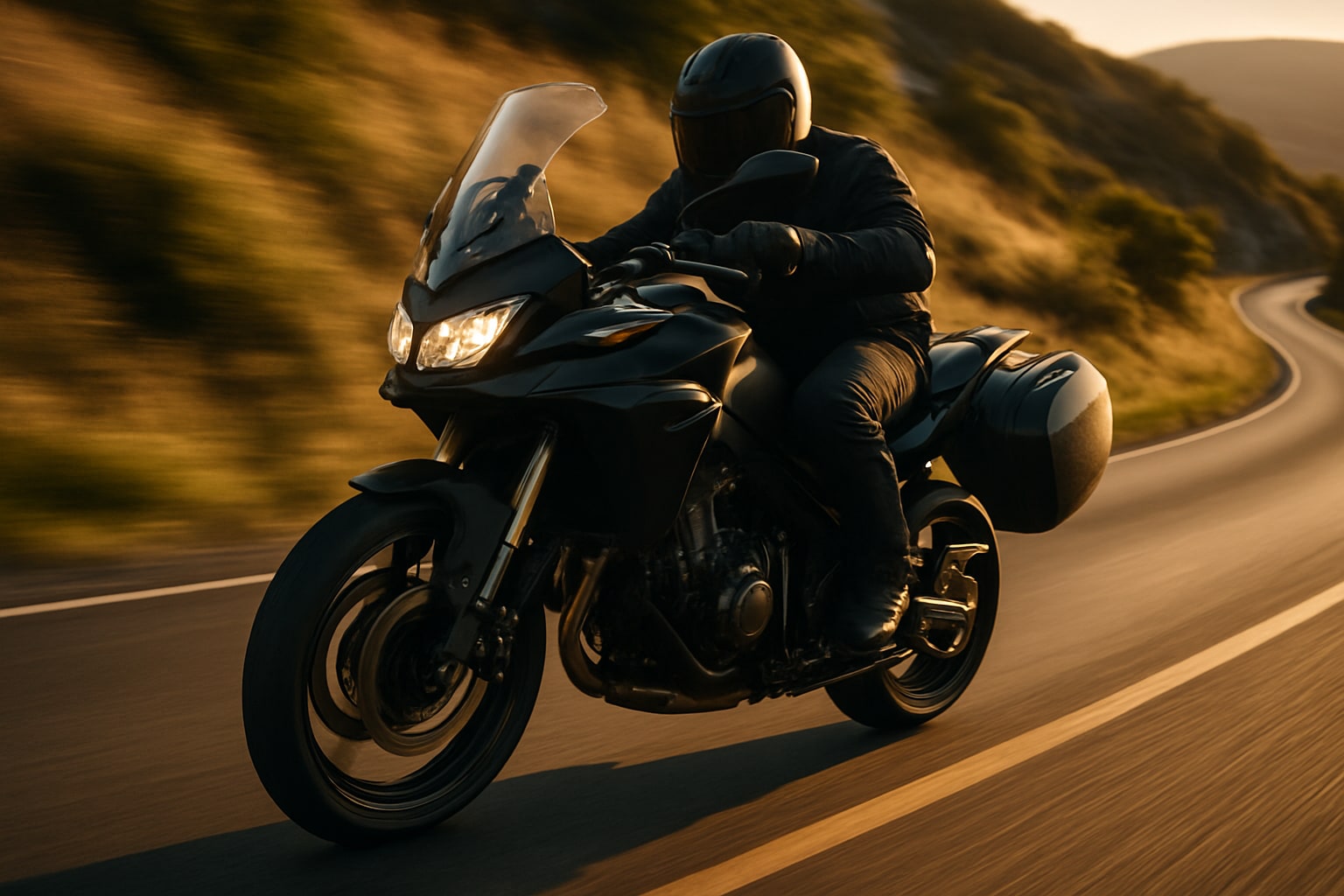
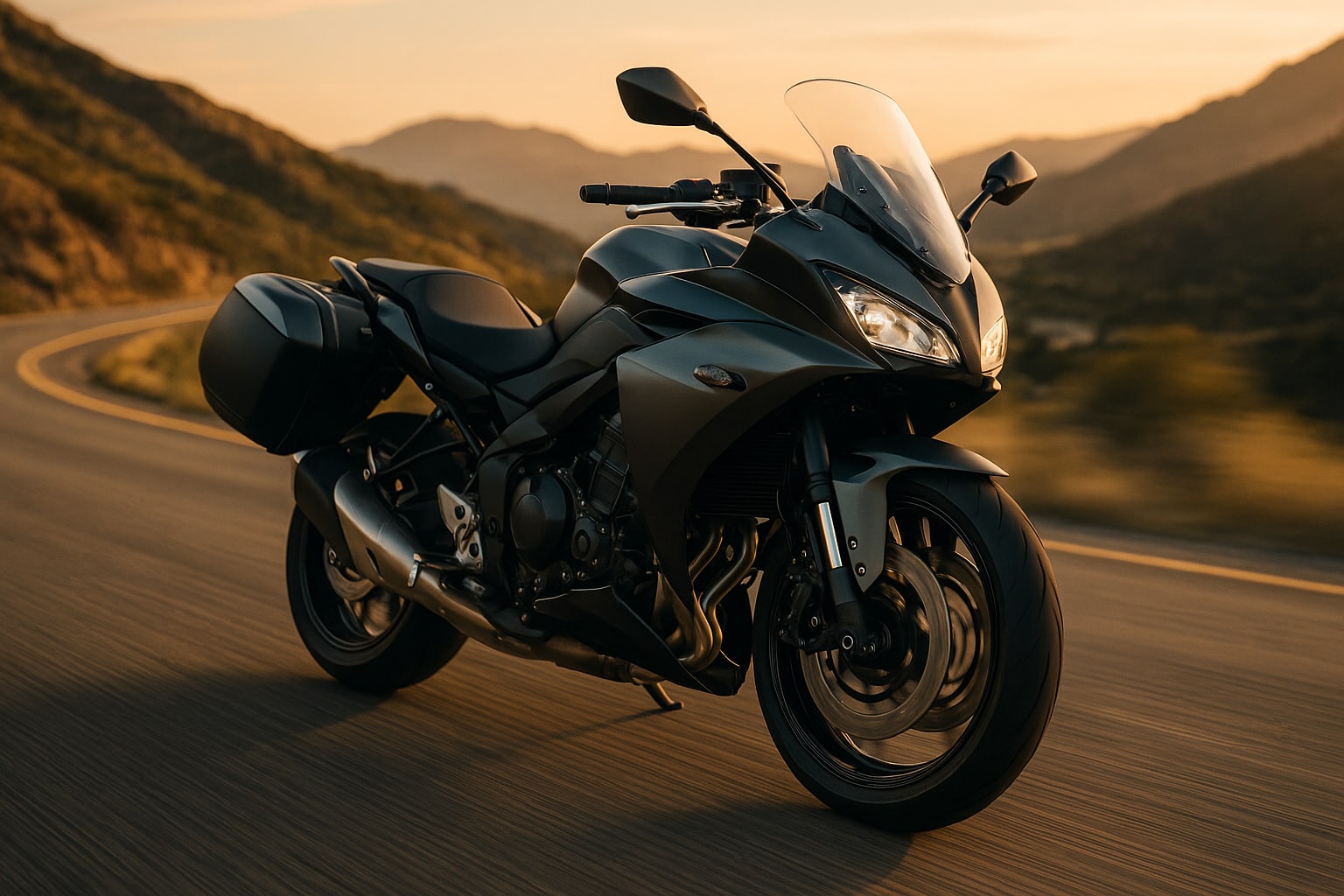
Honda Africa Twin Adventure Sports on the road: does it make sense if you never touch dirt?
We analyze whether the Honda CRF1100L Africa Twin Adventure Sports pays off for someone who only rides on tarmac, with real data and more logical sport-touring alternatives.
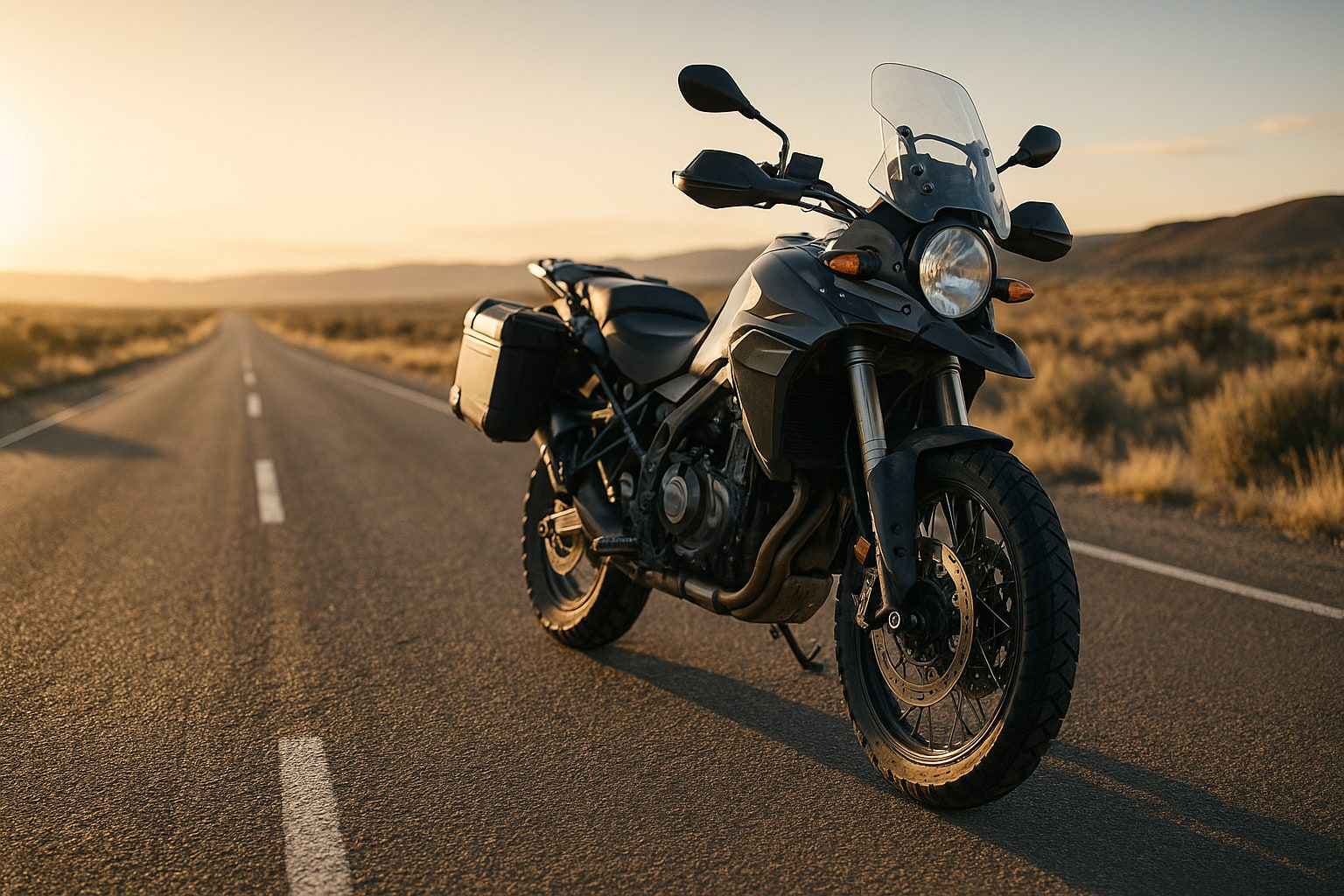
The doubt that comes up at every dealership Honda
You walk in to look at a naked bike and walk out thinking about a big trail. It happens to many people who turn up at a dealership Honda looking at the CB750 Hornet or the NT1100 and end up on the Africa Twin Adventure Sports, because it looks imposing, because it protects you and because it promises long trips. The uncomfortable question is a different one: if you are never going to take it onto a dirt track, does it really make sense to carry nearly 250 kilos and a seat height that scares you at the traffic lights?
Let’s get straight to the point. The Honda Africa Twin Adventure Sports on the road works, and works very well in certain scenarios, but it isn’t always the rational choice. Let’s go step by step.
Engine and performance: the twin-cylinder that behaves well on tarmac
At its heart is the well-known 1,084 cc parallel twin, which produces 102 hp (75 kW) at 7,500 rpm and 112 Nm of torque at 5,500 rpm. It’s not a stratospheric figure for its displacement, but the power delivery is so linear that on the road it is appreciated more than 30 extra hp you would never use.
On the road, the engine performs better than many expect. It pulls strongly from very low revs, you don’t have to play with the gearbox to overtake, and the sound, without being a spectacle, has character. The DCT version (optional, about 1,000 € more) is where the Africa Twin Adventure Sports on the road truly shines: in traffic jams, on mountain passes with chained bends and on the motorway at cruising speed, forgetting about the clutch changes the experience.
Estimated real fuel consumption riding on country roads and some motorway: between 4.8 and 5.3 l/100 km. With the 24.8-litre tank, that means real ranges above 450 km without pushing hard. This is where it gains many points as Africa Twin reviews for touring routes point out.
Ergonomics, handling and semi-active suspension
Here comes the first warning. The seat height ranges from 835 to 855 mm (adjustable), and the kerb weight is 240 kg in the manual version and 250 kg with DCT. If you are under 1.75 m tall, you will be moving it with the tips of your toes. It’s not a defect, it’s a reality: it is a maxi trail for tarmac, not a low sport-touring bike.
Once moving, those kilos disappear. The Showa EERA semi-active suspension, standard on the Adventure Sports, is one of the reasons it makes sense to consider it for pure road use: it adapts to the surface, takes a passenger without bottoming out, and in Tour mode it isolates you from bumps and expansion joints better than many sport-tourers with conventional suspension.
The obvious weak point is the standard dual-purpose tyre (similar to the Bridgestone Battlax Adventure). It performs correctly on dry tarmac, but in the wet and in fast corners you notice the limit sooner than with a 100% road tyre. If your plan is 0% dirt, that is the first logical change at the first wear.
Equipment and electronics: the Honda with the most gadgets
The Adventure Sports comes with:
- Cornering ABS managed by a 6-axis IMU (standard).
- HSTC traction control with 7 levels + off (standard).
- Riding modes: Tour, Urban, Gravel, Off-Road and two User modes (standard).
- Showa EERA semi-active suspension (standard on the Adventure Sports).
- 6.5″ touchscreen TFT with Apple CarPlay and Android Auto (standard).
- Cruise control (standard).
- LED headlights with cornering light (standard).
- Quickshifter (optional on the manual; the DCT makes it irrelevant).
- Heated grips and adjustable electric screen (standard on the Adventure Sports).
It is, by far, the most fully equipped Honda in electronics you can buy today without going up to the Gold Wing. In that respect, few direct rivals come close for the money.
Price, warranty and direct rivals
RRP in Spain (August 2026 list): Honda CRF1100L Africa Twin Adventure Sports from 18,700 € in the manual version and 19,700 € with DCT. Official 2-year warranty with no mileage limit. Note: compared with the previous generation, the price has risen by nearly 800 € due to the standard equipment and the Euro 5+ update.
Licence required: A. There is no homologated A2 version at 35 kW, something to bear in mind if you are stepping up.
Direct rivals if your use is 100% tarmac:
- Honda NT1100 DCT: same engine, 238 kg, seat at 820 mm, side cases standard on some versions and about 2,000 € less. For pure road riding, it is the honest comparison.
- Suzuki V-Strom 1050DE: more geared towards mixed use, with a parallel twin too, similar riding positions and a similar price.
- Yamaha Tracer 9 GT+: 890 cc, 119 hp, 220 kg, adaptive radar. A different school, sportier, less “expedition”.
If you are looking for something more manageable for daily urban use and short rides, a mid-size sport-tourer like the ones we compare here may suit you better.
Verdict: who it pays off for and who it doesn’t
It pays off if:
- You ride 15,000 km a year or more, with long trips of two or three weeks.
- You are 1.78 m tall or more and the weight doesn’t intimidate you when stationary.
- You value aerodynamic protection, the upright riding position and range over agility.
- You want a bike with presence and premium equipment without jumping to BMW or KTM.
It doesn’t pay off if:
- Your use is 80% city and 20% weekend getaways: the NT1100 does the same for less money and with better urban ergonomics.
- You are under 1.72 m tall and don’t want to lower the seat with an accessory.
- You are looking for strong thrills in corners: the 240-250 kg and the trail geometry will reach their limit sooner than a Tracer 9 GT+ would.
- Your budget is tight: paying the “Africa Twin extra” so you never leave the tarmac is throwing money away.
In short: the Africa Twin Adventure Sports is a great road bike, but it isn’t always the road bike you need. If you are never going to touch dirt, look at it with a cool head before signing anything. And test ride the NT1100 the same day. The answer usually becomes clear.
Technical and price data: official Honda website for Spain, August 2026. Estimated real consumption based on our own tests, cross-checked with users.