Honda Integra: the test (II)
The test of the Honda Integra did not leave us without opinions. To be honest, it is so different from the rest of the scooters that we are not quite sure whether to include it in this sector.
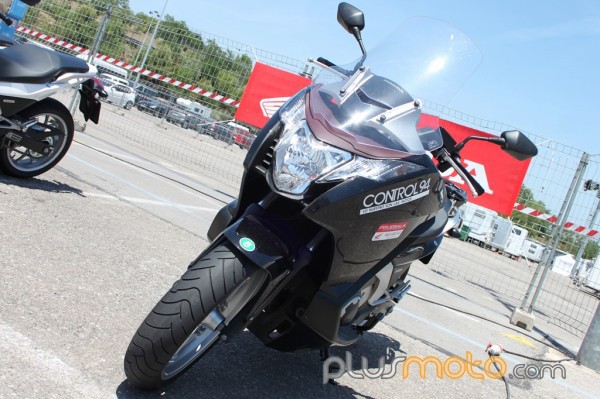
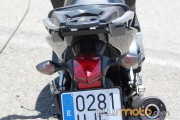
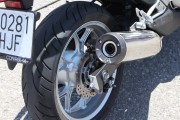
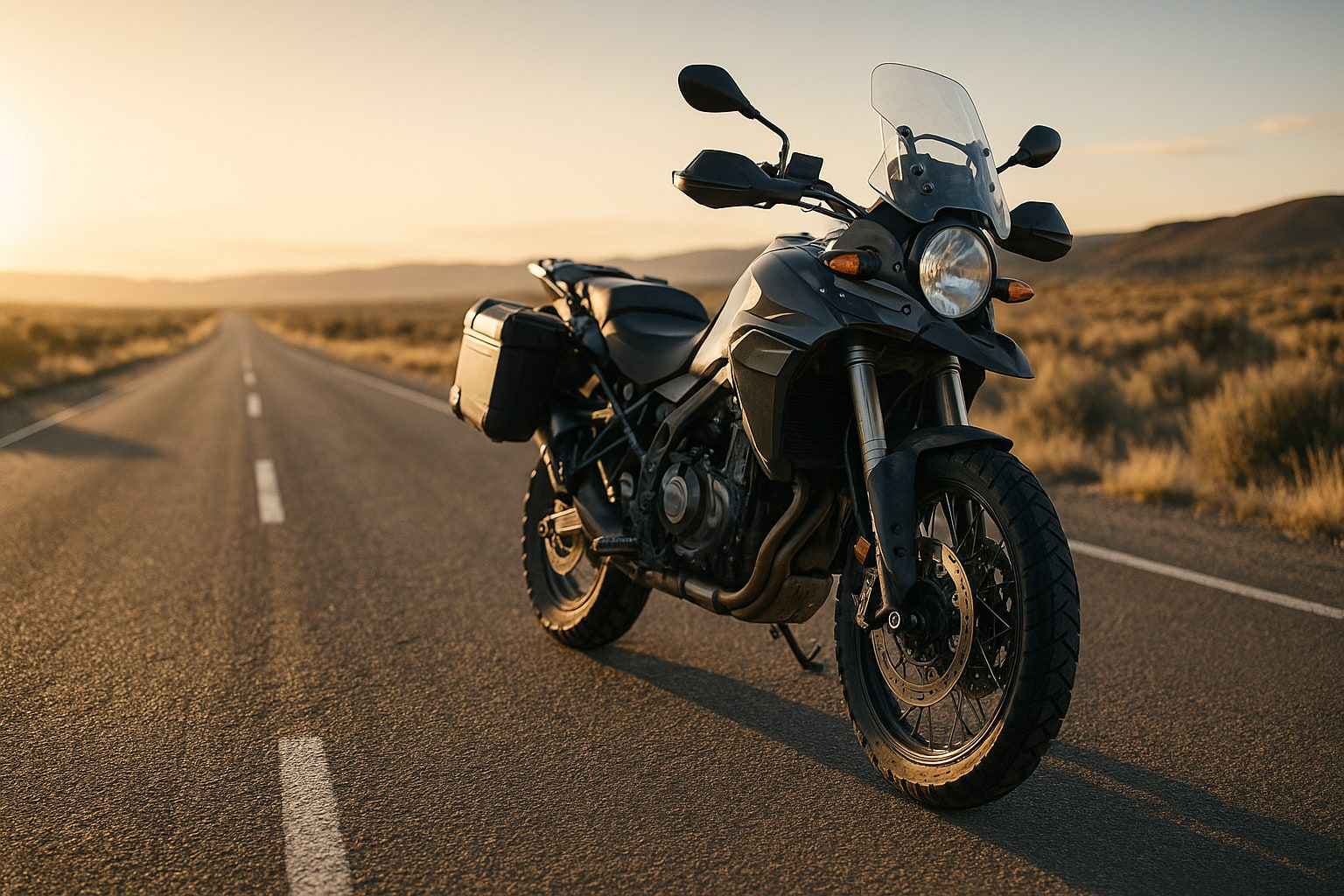
We continue with the test (part I). Now, getting closer to the Honda Integra, the first thing we notice is its impressive design, very similar to that of the VFR, following a brand style. We walk around it and observe the two brake discs with the C-ABS system, and we think: we’ll have to squeeze the brake to test it later. Its eye-catching headlights, with quite a bit of style, also stand out. Finally, looking at the whole, we see how the aerodynamics go from more to less, leaving us perfectly enveloped.
The windscreen looks quite wide, which suggests the aerodynamic protection will be good. However, given how hot it is, we would appreciate a smaller windscreen, but it is still early to say anything.

We look at the front glove box on the left side. It has a large size to carry all those things that fill our pockets and that we are so afraid of losing: house keys, the phone, the MP3 player, the wallet with the documents. It also has a 12V power outlet. Without a doubt, these glove boxes are a great comfort solution.
But speaking of storage spaces, let’s look under the seat. The space is not very large due to the configuration of the chassis and engine, both of which are located below, in order to make the bike more agile. That said, a jet-type helmet fits, which goes very well with this type of bike. For purists, however, it will be insufficient. Personally, I am a defender of the full-face helmet, and having a maxi scooter that does not give you the pleasure of leaving your helmet behind is not something I like very much. But that can be solved with the new gift they are offering from Honda: the Top Box. As a curiosity, the seat compartment is not opened from the ignition slot; like most motorcycles, it has its own lock.
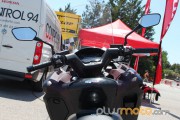
Now we get on to feel its first sensations. The first thing I notice is the seat height, slightly lower than the BMW C600 Sport and C650 GT, but the difference is quite small. Now, we stretch our arms to grab the handlebars and we do notice them a bit higher than expected. For someone like me, who is 1.85 m tall, the shoulders and elbows are almost in line. Despite what was expected, the position is not uncomfortable, and it gives a lot of control over the bike.

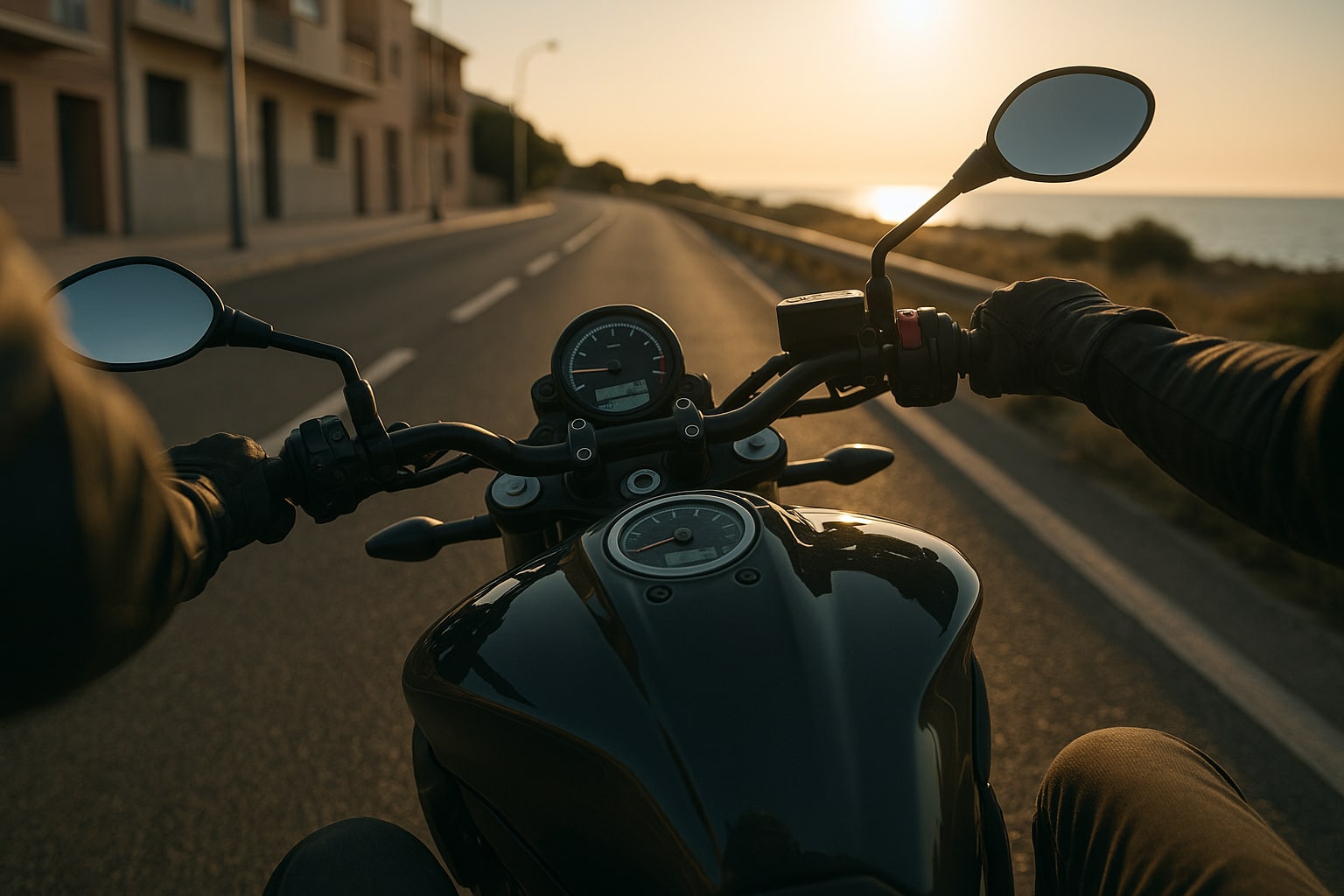
We start getting used to the controls:
-
-Left grip:
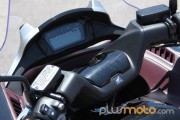
Horn, high beam, hazard lights, turn signals, downshift button and upshift trigger (operated with the index finger).
-
-Right grip:
Electric start, cut-off of the electrical system, transmission mode selector: D (Drive), S (Sport) and N (Neutral). If you want to switch to manual mode, there is another trigger for this change, also operated with the index finger.
We start to get to know the throttle. It seems it indeed has the torque they talk about: it leaps off as if it were angry. It is controllable but powerful, so a ten in this regard. We head out onto the road and, of course, we start testing its response. Remember that this is a dual-clutch transmission, so the shift in D mode between gears will be imperceptible. The selection of the RPM range at which to shift is managed automatically by the bike, depending on the position of our throttle hand, and it is quite intelligent. In fact, if we are cruising in sixth gear at a relaxed pace and want more power, the bike will downshift one, two, or as many gears as needed to respond with force.

And so it does. The power is there, although perhaps, for someone like me who is not very patient, the shifting happens with little speed and is very noisy. This last point was something other testers emphasized, because they liked it: it made them feel the bike more as such. As they say, there is no accounting for taste. In reality, this is exactly what Honda wanted from the very beginning: to make a maxi scooter with the behavior of a motorcycle.
We move on to S mode, the sporty one. We notice that the shift point is now higher, and if we twist the throttle hard, it climbs all the way to the end of the rev counter, although it does not reach the ignition cut-off. In this system, much more agile than the previous one, we find the drawback of engine braking: on many occasions it is too strong, slowing the bike more than we would like.
But in both cases we can use manual shifting, so that even though we are in automatic modes, our requests will be honored, allowing us to add or remove gears at any given moment. For example, when riding in Drive mode, we can use engine braking to enter a corner, or in Sport mode, lengthen the gearing to let the bike run. Little by little we get used to the bike’s behavior. The time the bike allows our “manual” shifting is limited; that is, when using engine braking and downshifting, at the least expected moment the bike may return to its natural state, making us lose a bit of concentration and feeling. But it is nothing we cannot learn to handle after covering several kilometers on the bike.

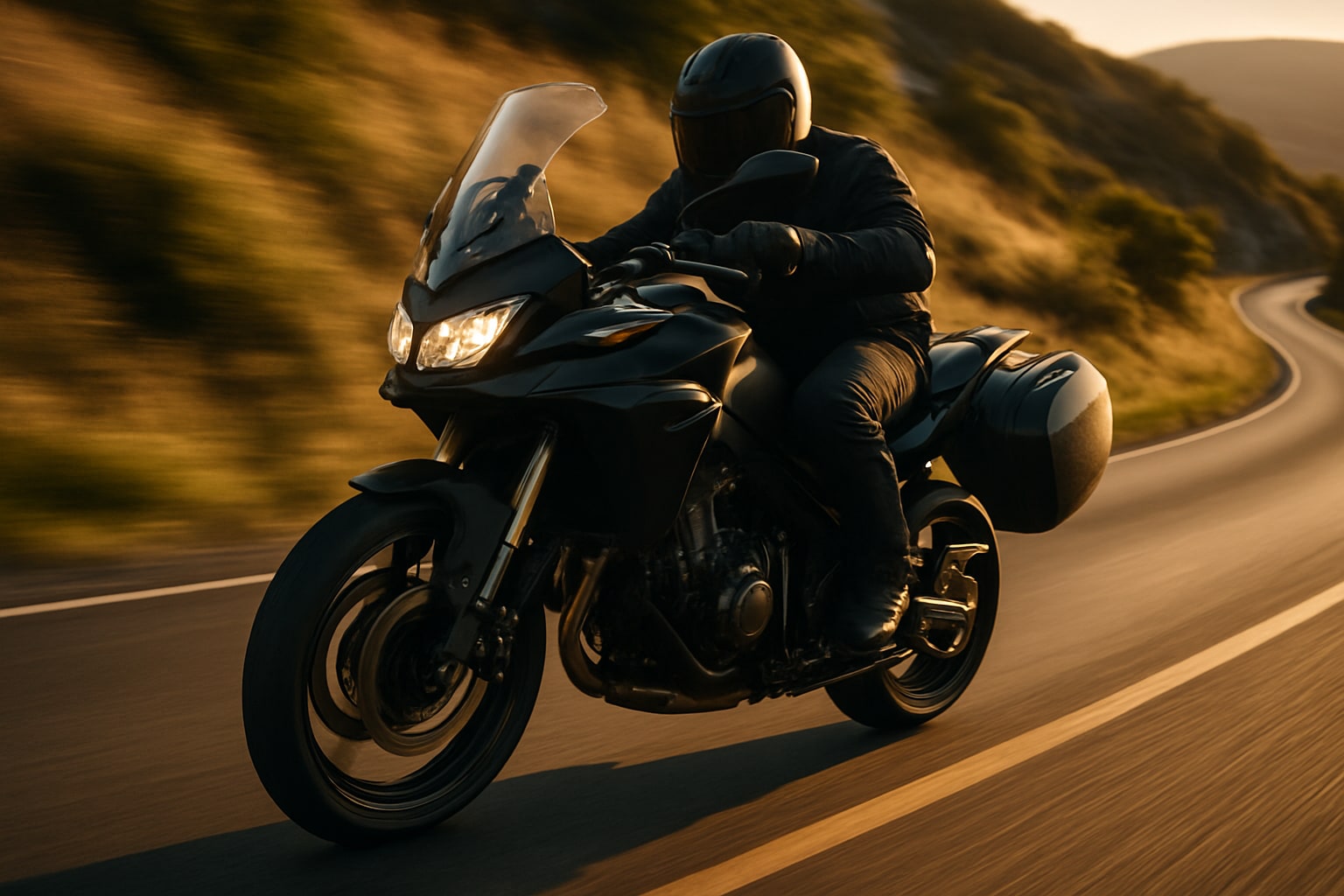
Dynamically, the bike is a corner carver. We can lean it until it almost touches the center stand without much effort, passing through corners quickly and comfortably. This is when the position is most noticeable: the low chassis and engine, and our arms in a fairly high position, help with the placement of our body.
We switch to manual mode. The bike is all ours, and we start accelerating. But again, we must keep in mind what this bike was made for: it cannot achieve the very low consumption of 3.8 liters per 100 km claimed by the brand, or the 4.2 that some colleagues from the press have measured, when revving up to 10,000 rpm. That is why the bike stalls around 8,000 rpm, which makes it a bit short for use on roads with short straights. Still, it is a matter of changing the chip on this very special bike.
All the buttons and switches are well placed, making pressing errors difficult, something many other motorcycles cannot claim.

Now let’s see how the C-ABS works. We reach a left-hand bend and suddenly let the bike run a bit more than we should. It is in Drive mode, so the engine provides little braking. We brake just before entering with force. The maxi scooter remains agile, does not make abrupt jumps, and lets us trace the curve with ease. This system works really well.
The price is €8,599. If you want it, don’t hesitate; now is the moment, in July.
-
– In summary:
-
– Pros:
Attractive design.
Versatility of modes.
C-ABS.
Low consumption.
-
– Cons:
Noisy and somewhat slow shifting.
The ignition cut-off is reached very easily.
Little space under the seat.
Photos | Alejandro Batán (Plusmoto.com)
3 comments · Comment
3 comments
Mira que es fea la parte delantera….mastodontica…ni las grandes son tan aparatosa…a departamento diseño Honda . a ver si la adelgazan.