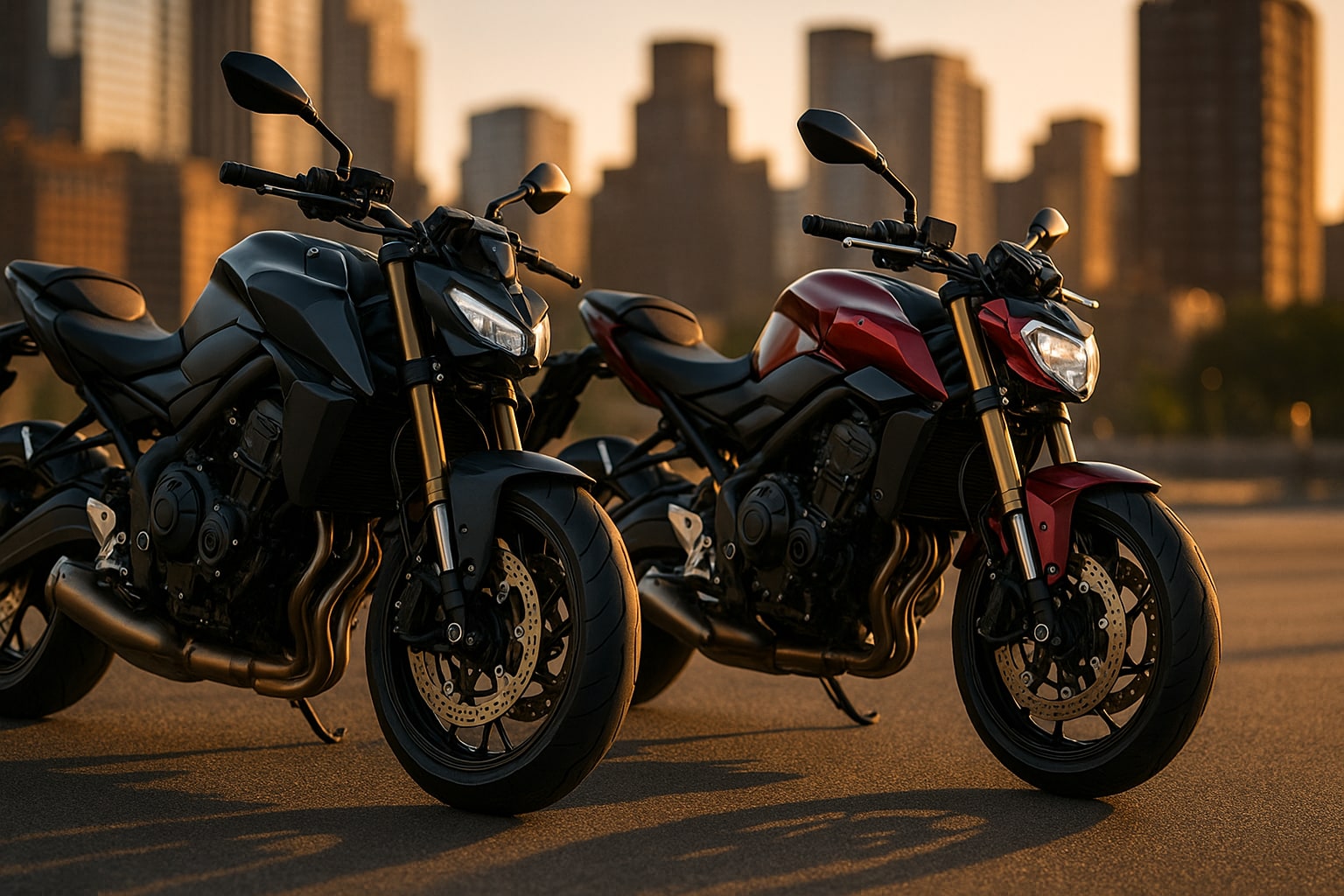
Aprilia RS 660 vs Yamaha R7: mid-range sportbikes you can enjoy without losing your licence
We compare the Aprilia RS 660 and the Yamaha R7 on engine, electronics, ergonomics and price to help you decide which mid-range sportbike offers better value in Spain in 2026.
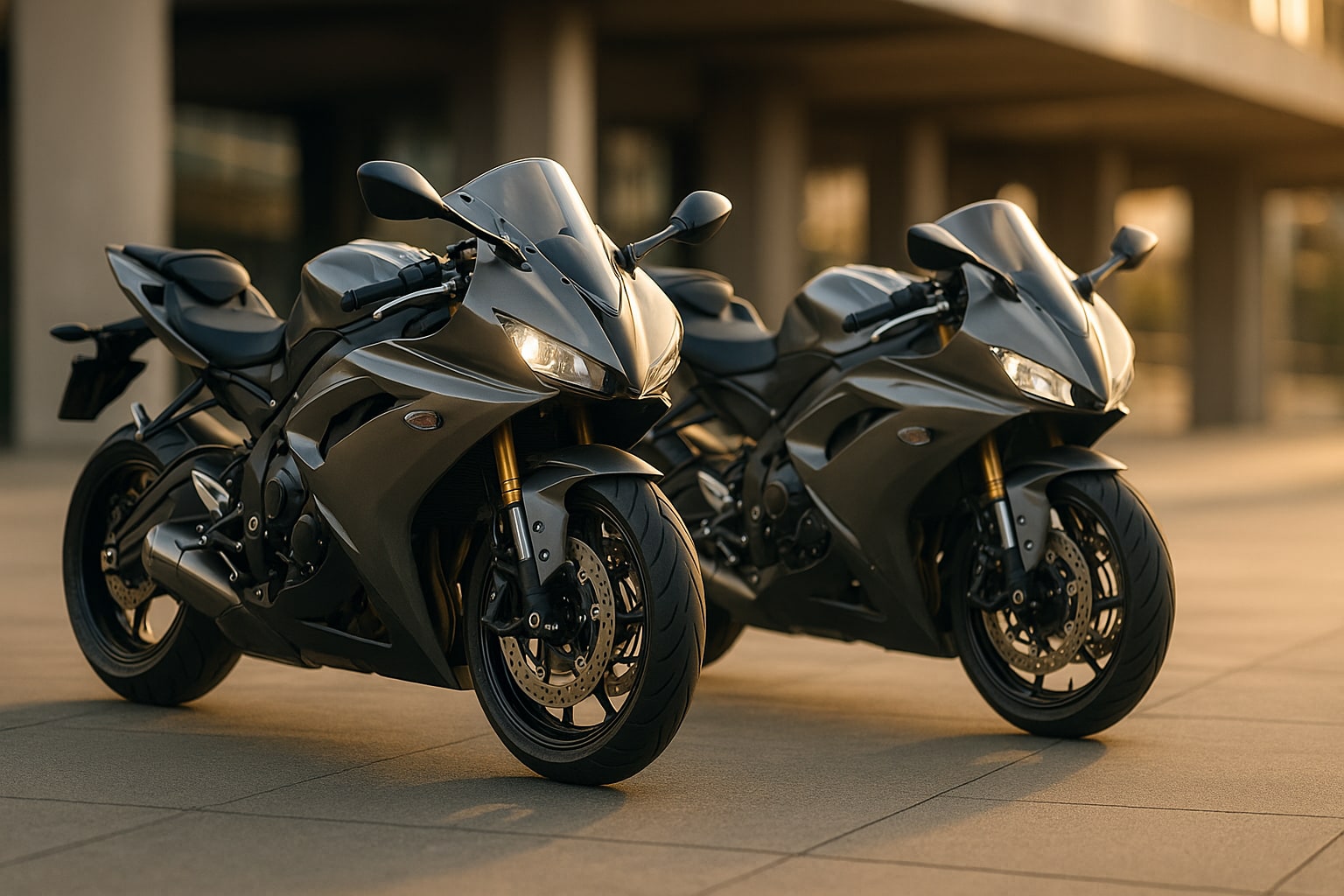
There’s an odd gap in the sportbike market: 1000s have become unmanageable on open roads, and 300s feel limited after a month of ownership. Right in between live the Aprilia RS 660 and the Yamaha R7. Two bikes with very different philosophies but the same goal: giving you a sportbike you can actually use without ending up with your licence in the glovebox.
Why mid-range sportbikes are back in fashion
The mid-size twin segment has become the refuge for anyone who wants to enjoy riding without going overboard. The Kawasaki Ninja 650, the Honda CBR650R and today’s two protagonists share the same diagnosis: accessible engines, contained weights and a riding position that won’t wreck your wrists at the first traffic light. If you’re coming from an A2 licence and want to make the leap without jumping into a superbike, this is your territory.
Engine: Italian V2 versus Japanese CP2
This is the biggest difference, and the one you’ll notice from the very first kilometre.
The Aprilia RS 660 uses a 659 cc parallel twin with a 270° crankshaft that sounds and pulls like a V2. It produces 100 hp (73.5 kW) at 10,500 rpm and 67 Nm at 8,500 rpm. It’s a lively engine up top, full of character, but it also has low-end reach thanks to that uneven firing-interval configuration.
The Yamaha R7 uses the well-known 689 cc CP2, the same unit you already know from the MT-07 and the Ténéré 700. It delivers 73.4 hp (54 kW) at 8,750 rpm and 67 Nm at 6,500 rpm. Less peak power, yes, but the torque arrives earlier and pushes harder in town and on second-gear corners.
- Displacement: 659 cc (Aprilia) vs 689 cc (Yamaha)
- Power: 100 hp / 73.5 kW vs 73.4 hp / 54 kW
- Torque: 67 Nm @ 8,500 rpm vs 67 Nm @ 6,500 rpm
- Licence: A (Aprilia, with a homologated 35 kW A2 version) / A2 directly (Yamaha, a full A version is also available)
If you want outright performance, the RS 660 gives you 27 hp more. If you want usability and an engine that doesn’t force you to keep shifting, the CP2 remains a gem of accessibility.
Chassis, ergonomics and cornering behaviour
The RS 660 weighs 183 kg ready to ride with a seat height of 820 mm. The R7 comes in at 188 kg and its seat sits at 835 mm, a bit taller than you’d expect given the racy look Yamaha has given it.
On the road, the Aprilia feels more refined: aluminium twin-spar frame, balanced geometry and a less extreme riding position than its looks suggest. The clip-on handlebars sit above the top yoke, so your wrists suffer less on long rides.
The R7, on the other hand, opts for a fully adjustable 41 mm KYB inverted fork (surprising at this price) and a tubular frame derived from the MT-07 but re-calibrated. It’s more direct when turning, more “knife-edge”, but also more tiring in town because the clip-ons are mounted below the top yoke.
Electronics: APRC package versus minimalist approach
Here the difference is enormous and defines who each bike is for.
Aprilia RS 660 (standard equipment):
- Cornering ABS with 6-axis IMU
- APRC traction control, adjustable across 8 levels
- Wheelie control
- Five riding modes (three road, two track)
- Bidirectional quickshifter (optional on base versions depending on year)
- Cruise control
- 4.3″ colour TFT dash with connectivity via the AMP app
Yamaha R7 (standard equipment):
- Dual-channel ABS (not cornering-aware)
- No traction control
- No riding modes
- No IMU
- Quickshifter optional (QSS accessory kit)
- Monochrome LCD dash
Yes, you read that right: the R7 is sold in 2026 with an LCD dash and no traction control. Yamaha has prioritised price and mechanical purity over electronics. It’s a legitimate decision, but you should know it before signing.
Price in Spain and warranty
List prices as of August 2026:
- Aprilia RS 660: from €11,900 (standard version). The Extrema and special editions go up to €13,500. Two-year warranty with no mileage limit.
- Yamaha R7: from €9,799. Two-year warranty. The A2 version is offered at the same price.
Real-world fuel consumption in mixed use: the RS 660 sits around 4.8–5.2 l/100 km, while the R7 drops to 4.3–4.6 l/100 km thanks to its lower power and calmer tuning. Tank capacities are 15 l on the Aprilia and 13 l on the Yamaha.
Direct rivals include the Kawasaki Ninja ZX-6R, still available in Spain for those who want a classic four-cylinder, and the Honda CBR650R with E-Clutch transmission if you prefer smoothness and Japanese reliability. If you’re after a sport naked of the same capacity, take a look at the Triumph Street Triple 765 RS, though it plays in a different price league.
Weak points: nothing is perfect
The RS 660 carries a high price for its segment and an Aprilia dealer network in Spain that is more limited than Yamaha’s, which can make maintenance harder depending on where you live. In addition, Aprilia sportbikes still depreciate faster than the Japanese alternatives.
The R7 has an obvious problem: decade-old electronics. With no traction control, no riding modes, an LCD dash and an optional quickshifter, it’s hard to justify against more modern rivals. Its riding position is also more aggressive than photos suggest.
Verdict: who each bike suits
Buy the Aprilia RS 660 if you want high-end electronics, a genuine 100 hp, an engine with Italian character, and you don’t mind paying €2,000 more or depending on a smaller dealer network. It’s the technically superior choice and the one that will age better if you enjoy the occasional track day.
Buy the Yamaha R7 if you prioritise price, CP2 reliability, a broad official dealer network, and a bike you can take to a track day without fussing over menus. It’s honest about what it offers, but you need to accept its electronic minimalism as part of the package.
Neither will disappoint you on the road. The real question is whether you’re willing to pay Aprilia’s premium for a more complete bike, or prefer Yamaha’s straightforward approach and put the difference into good gear and a few tanks of fuel.
Technical data sourced from the official Aprilia and Yamaha Spain websites, updated to August 2026. Fuel consumption estimated from our own tests and cross-checked with owner reports.