Vespa GTS 310 HPE: when the price goes up, is it still worth it?
We analyze the new Vespa GTS 310 HPE: price in Spain, real technical specifications and comparison with Honda Forza 350, Yamaha XMAX 300 and Kymco X-Town 300.
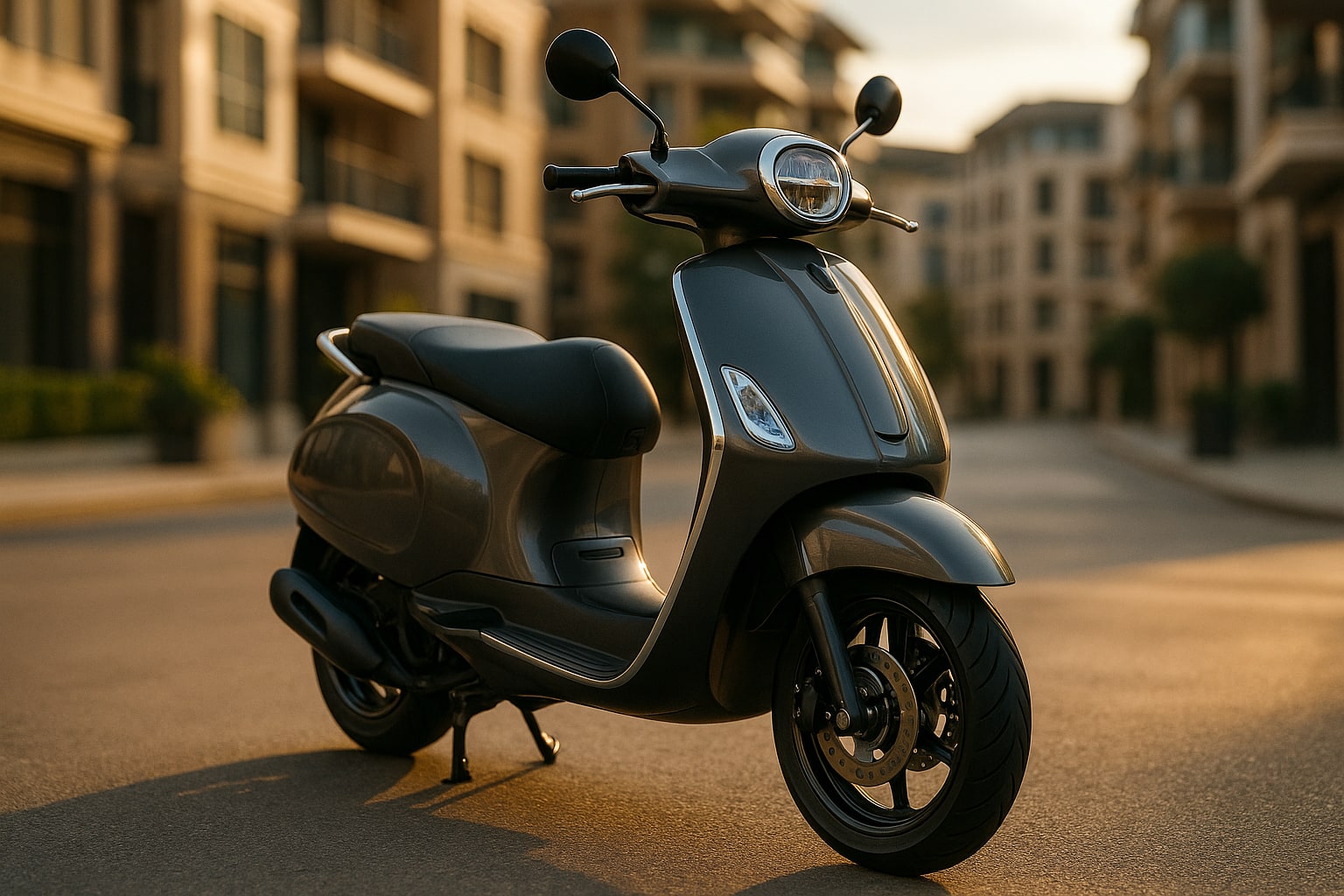
Vespa GTS 310 HPE price: the jump from 300 to 310 nobody asked for, but Piaggio has done it anyway
The Vespa GTS has grown once again. Not by much, mind you: it goes from 278 to 310 real cc, gains a bit of horsepower and gets more serious electronics. But the price tag also goes up, and that’s where the debate lies. Because if you buy a Vespa, you know you pay a premium for the steel chassis and Italian design; the question is how big a premium you’re willing to accept in 2026, when the rest of the GT-125/300 segment has gotten very serious.
What changes compared to the Vespa GTS 300 HPE
The Quasar HPE engine grows to 310 cc and gets a revised liquid cooling system, a new cylinder head and a redesigned intake. The figure Piaggio publishes is around 26 hp (19 kW) at 8,250 rpm, with torque close to 26 Nm at 5,250 rpm. Compared to the outgoing GTS 300, we’re talking about a couple more horsepower and a bit more thrust in the mid-range, not a mechanical revolution.
The chassis remains the classic stamped steel monocoque that has defined the Vespa since 1946. Some details change: a new 4.3-inch colour TFT dashboard, a full LED headlight with a renewed light signature and, at last, cornering ABS comes as standard alongside ASR traction control connected to the IMU.
Vespa GTS 310 HPE technical specifications
- Displacement: 310 cc (single-cylinder, 4-stroke, liquid cooled)
- Power: 26 hp (19 kW) at 8,250 rpm
- Maximum torque: 26 Nm at 5,250 rpm
- Kerb weight: 172 kg (Piaggio quotes kerb weight)
- Seat height: 790 mm
- Fuel tank: 7 litres
- WLTP consumption: 3.4 l/100 km
- Estimated real consumption: 3.8-4.2 l/100 km in mixed city-road use
- Licence: A2 and A (also valid with B after three years, as it is a scooter ≥125 cc with limited power; there is no A1 version)
- Tyres: 120/70-12 front and 130/70-12 rear
- Brakes: 220 mm disc front and 220 mm disc rear with dual-channel ABS
Engine and real performance
On paper 26 hp doesn’t impress, but the HPE engine has a lively character from very low revs and a throttle response that suits the bike’s light weight. In town it moves with ease, overtakes cars without drama and keeps up with fast roads at a real 110-120 km/h without strain. Top speed is around the indicated 125 km/h, so long motorway trips are not its natural territory.
Real consumption is in line with the segment: in pure urban use you can get down to 3.5 l/100 km, and if you open the throttle on the open road you’ll be at a little over 4. With a 7-litre tank, practical range is 160-180 km before you look at the reserve.
Ergonomics, handling and suspension
This is where the Vespa plays its strongest card: the 790 mm seat height and the flat footboard area make it accessible for almost any height. The riding position is upright, comfortable for medium journeys, and the front screen protects reasonably well from the wind down to the lower chest.
In corners, the monocoque chassis delivers a unique feel in the segment: rigid, precise, with direct steering feedback. The downside is the suspension. The front single-sided fork and the twin rear shock absorbers do the job, but they register sharp potholes more than a Forza 350, especially with a passenger. There is no simple preload adjustment accessible to the user.
Equipment and electronics
Standard equipment includes:
- Cornering ABS with IMU
- Switchable ASR traction control
- 4.3″ colour TFT dashboard
- Vespa MIA connectivity (calls, notifications, turn-by-turn navigation via app)
- Full LED lighting
- USB-C socket in the glovebox
- Keyless smart key
Optional extras still include the original top-case with backrest, high windscreen and heated grips. There is no quickshifter (it is a CVT automatic scooter) nor cruise control, something that starts to show in a GT meant for touring when compared with rivals that do fit them.
Vespa GTS 310 HPE price in Spain and warranty
The official RRP of the Vespa GTS 310 HPE in Spain starts at €7,399 for the base finish and rises to €8,199 for the SuperTech version with revised rear suspension and specific details (August 2026 list price, transport and registration not included). Compared with the €6,999 at which the GTS 300 HPE bowed out, the increase is around €400.
Official 2-year warranty with no mileage limit through the Piaggio network in Spain. Piaggio Financial offers specific financing terms with a low deposit, but it’s worth reading the small print because the interest rate doesn’t always compensate compared with a classic bank loan.
Direct rivals: Honda Forza 350, Yamaha XMAX 300 and Kymco X-Town 300
| Model | Displacement | hp | Kerb weight | Tank | RRP from |
|---|---|---|---|---|---|
| Vespa GTS 310 HPE | 310 cc | 26 hp | 172 kg | 7 l | €7,399 |
| Honda Forza 350 | 330 cc | 29 hp | 184 kg | 11.7 l | €6,700 |
| Yamaha XMAX 300 | 292 cc | 27.6 hp | 179 kg | 13 l | €6,399 |
| Kymco X-Town 300i | 275 cc | 22.7 hp | 168 kg | 12.5 l | €4,999 |
The comparison is blunt. The Honda Forza 350 offers more power, a bigger tank, a windscreen with electric adjustment and a more authentic GT riding position for less money. The Yamaha XMAX 300 is more agile, cheaper and has a modern chassis. The Kymco X-Town 300 is €2,400 cheaper and does 80% of the job. None of the three has the steel chassis or the visual pull of the Vespa, and none holds its value in the second-hand market in the same way.
Verdict: who it suits and who it doesn’t
It suits: those who want a Vespa for what it is (design, community, well-preserved residual value), who ride mostly in town and on short road trips, and who accept they’re paying an aesthetic and emotional premium. As a premium second urban vehicle it still makes a lot of sense.
It doesn’t suit: those looking for the most rational GT scooter per euro invested. There, the Forza 350 and the XMAX 300 win on performance, road ergonomics and price. It’s also not for those who do many motorway kilometres: a 7-litre tank and a 125 km/h top speed are real limitations.
If your criterion is purely cost-benefit, the GTS 310 HPE is not the answer. If your criterion includes “I want a Vespa”, then the €400 increase over the 300 is justifiable given the cornering ABS, the TFT and the extra torque. The problem, as always with Vespa, is not the bike: it’s the entry price. And in 2026 that price is starting to brush the ceiling of what is reasonable.
If you are comparing options within the A2 licence category, take a look also at the best A2 motorcycles under €6,000 to get the full picture before signing.
Technical data and RRP: official Piaggio Spain website, August 2026. Estimated real consumption based on our own tests in mixed city-road use.
