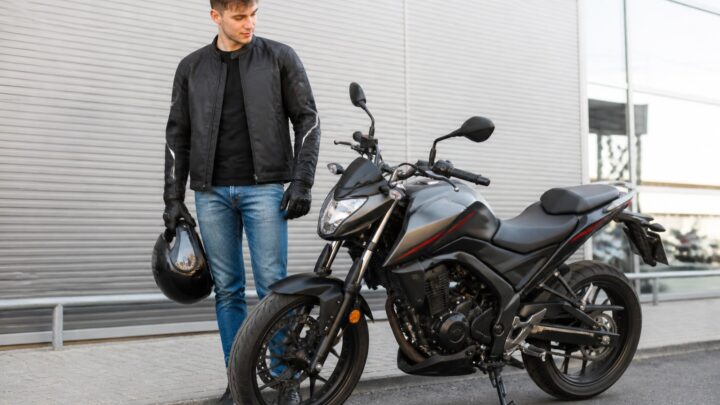
Replacement motorcycle in insurance: what it is and how it works
Coverage designed so you're never left without a vehicle


When taking out motorcycle insurance, it is advisable to evaluate the coverage offered by the policy to check whether it suits the policyholder’s needs. For example, having a replacement motorcycle included in the policy is a very worthwhile benefit for anyone who rides frequently.
Insurers have evolved and now offer more comprehensive policies. They no longer focus solely on covering financial losses arising from a claim; they also address the policyholder’s mobility needs.
In this regard, it should be noted that motorcycle use increases considerably during the warmer months, which also raises the likelihood of incidents. In fact, breakdowns, accidents or thefts are usually unexpected events that can leave riders without their motorcycle for several days, so this type of protection is a practical solution for dealing with such situations.
What a replacement motorcycle is and how it works
A replacement motorcycle is a guarantee that allows the policyholder to have an alternative vehicle when their own cannot be used for reasons covered by the policy.
It is usually included in the most comprehensive insurance, especially fully comprehensive policies.
This coverage applies depending on the claim and the specific terms of the contract.
The operation follows two common methods: the insurer may provide the vehicle directly through agreements with workshops or rental companies, or it may choose to reimburse the policyholder for the cost, always within the set limits.
Furthermore, it should be remembered that the vehicle provided does not necessarily have to match the insured motorcycle. Characteristics such as engine capacity or category must be stated in the policy terms.
Conditions for requesting a replacement motorcycle
Although each insurer sets its own conditions, there are some criteria common across the sector. Antonio Rubio, head of motorcycle insurance at Rastreator, notes: “Although each company has its own conditions, most usually establish some common causes for being able to request a replacement vehicle. One of them is that the insured motorcycle is immobilised due to an accident and its repair requires it to remain in the workshop for longer than a certain limit, which is normally 24 hours.”
Accidents are one of the main scenarios, although theft is also covered, provided the corresponding police report has been filed. In some cases, a minimum waiting period must elapse before the replacement vehicle coverage is activated.
For its part, in the case of a total loss, the insurance company provides a temporary alternative.
Regarding mechanical breakdowns, these are not always included; coverage depends on the policy and is usually subject to specific conditions.
Usage limits and duration of coverage
Policies set limits affecting both the period of use and the financial amount. When a breakdown is covered, the period is usually around five days. In addition, some insurers set a maximum amount of between 200 and 300 euros.
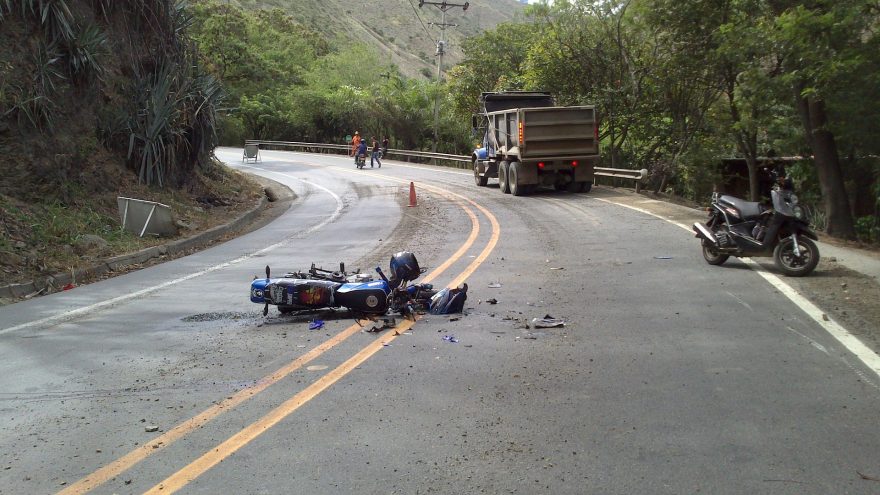
The period may be extended to between seven and fifteen days when a claim prevents immediate repair. The financial limit is around 400 euros in these cases.
Finally, if a total loss is declared, the duration of coverage is usually around fifteen days. The maximum period also falls within this range in cases of theft.
Conditions of use: mileage and associated costs
Using the replacement motorcycle involves bearing fuel costs for the entire period, while mileage may be limited.
That is, some companies set a maximum distance, while other insurers impose no restrictions in this respect. If the set limit is exceeded, the policyholder will have to pay a financial penalty.
Type of vehicle and liabilities
The characteristics of the replacement motorcycle must be specified in the policy, including aspects such as maximum engine capacity.
The compulsory insurance for the replacement vehicle is covered by the insurer. However, any damage that may occur during its use falls on the driver.
And if no motorcycle is available, some companies offer a car as an alternative, subject to similar conditions regarding duration and limits.
Compensation when no vehicle is available
Some policies provide for a financial compensation when the insurer cannot provide a vehicle. This compensation is intended to cover transport costs, and is usually set as a daily amount, generally between 35 and 40 euros, with an overall maximum limit. The aim, therefore, is to reduce the financial impact arising from the lack of mobility.
In short, a replacement motorcycle is an effective solution for unforeseen events that prevent the use of the usual vehicle. Before taking out a policy, it is advisable to review in detail the covered situations, the limits and the associated obligations.