Moto Guzzi V7 Stone review: character, vibrations and the reality of living with it
We tested the Moto Guzzi V7 Stone with its 850 cc transverse twin in everyday use: character, vibrations, real fuel consumption and who it makes sense for compared to the Bonneville or Z650RS.
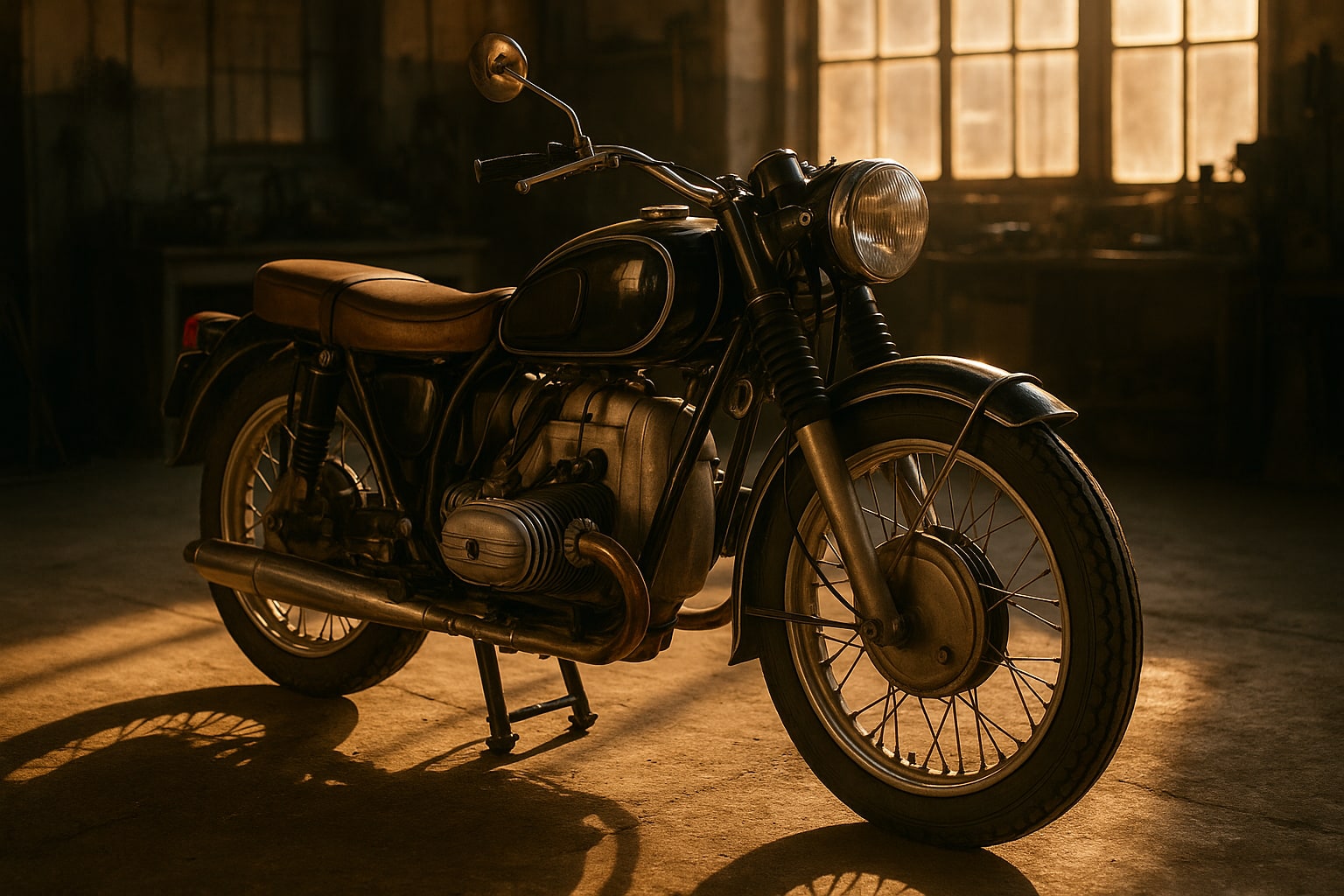
Moto Guzzi V7 Stone review: the neo-retro that doesn’t hide what it is
Some motorcycles are bought with the head and others with the gut. The Moto Guzzi V7 Stone falls squarely into the second category, and that’s the first thing to make clear before getting into the numbers. The transverse twin from Mandello del Lario has a characteristic rocking when you open the throttle at neutral that no other neo-retro replicates, and that detail defines half the experience.
The question isn’t whether the V7 Stone is fast (it isn’t) or whether it’s the best equipped (it isn’t either). The interesting question is how you live with it once the initial infatuation fades and you have to rack up real kilometres, fit it in the garage, pay the insurance and decide whether you’d still choose it after a year.
850 cc engine: the transverse twin rules
The heart is still the 853 cc air-cooled 90º transverse V-twin, with pushrod valve actuation and rocker arms. It delivers 65 hp (48 kW) at 6,800 rpm and a peak torque of 73 Nm at 5,000 rpm. These aren’t sensational figures, but the torque arrives low down and with conviction: in fourth gear at 3,000 rpm the bike pulls without complaint, which is how most people end up riding in town and on secondary roads.
It’s homologated for the A licence; there’s no 35 kW A2 version in the current catalogue. If you hold an A2, you’ll have to look at the V7 in other configurations or seek a specific restriction, something not every dealer offers.
With the standard exhaust, the sound is muffled and deep. No stridency. And yes, it vibrates. It vibrates through the handlebars noticeably between 4,000 and 5,000 rpm, and at sustained motorway speed (a real 120 km/h, around 4,500 rpm) your hands feel it on long journeys. This isn’t a manufacturing defect, it’s a trait of the engine. Anyone looking for Japanese smoothness won’t find it here.
Ergonomics and handling: comfortable in town, adequate on the motorway
With a 773 mm seat height and 218 kg kerb weight, the V7 Stone is accessible to almost any height. The riding position is upright, with a wide handlebar and slightly forward footpegs. It fits you well from the first minute, without the adaptation period demanded by other neo-retros with a sportier triangle.
In town it moves with ease: a reasonable turning radius, light clutch and smooth throttle response. On mountain bends it responds nobly, although the front end calls for conventional non-adjustable forks that should be taken calmly, without punishment. The rear shock absorbers with preload adjustment are basic and on broken surfaces they bounce more than they should.
The 21-litre tank is generous for the segment and gives plenty of real-world range.
Real consumption and range
Moto Guzzi homologates around 4.7 l/100 km WLTP. In real mixed use, between town and secondary roads at a relaxed pace, it runs at 5.0–5.4 l/100 km. If you push on the motorway it rises to 5.8–6. With those consumption figures and a 21-litre tank, we’re talking about 380–400 real km between refuelling stops, a very competitive figure for a neo-retro.
Equipment and electronics: just enough, no frills
Here the V7 Stone plays in the league of functional minimalism. What it comes with as standard:
- Dual-channel ABS (not cornering ABS, there’s no IMU).
- MGCT traction control, switchable, with two levels.
- Circular digital dashboard in monochrome with all the basic information. It is not a colour TFT.
- Full LED lighting.
- USB socket under the seat.
What it doesn’t have, at least not as a clear factory option: riding modes, quickshifter, cruise control, app connectivity, navigation, semi-active suspension. For many riders this will be a virtue (less electronics, fewer things to fail); for others, a problem in 2026 when a Suzuki GSX-8S with full TFT and quickshifter sits in a similar price range.
Price, warranty and direct rivals
The RRP of the Moto Guzzi V7 Stone is around €10,499 (July 2026 listing), with the usual variation by dealer and campaign. Piaggio Spain tends to run occasional financing promotions; it’s worth asking in store because the real price can drop €500–800 with seasonal offers. Official two-year warranty with no mileage limit.
Direct rivals you’ll inevitably compare it with:
- Triumph Bonneville T100 (900 cc, 65 hp, €12,195): more refined, with more visual presence, a smoother parallel twin engine. It costs clearly more and weighs about the same.
- Kawasaki Z650RS (649 cc, 68 hp, €8,599): cheaper, lighter (188 kg), a smoother Japanese parallel twin and less charismatic. A different philosophy.
- BMW R 12 nineT: plays in a different price and performance league, but if you’re after the character of the boxer, take a look at our test of the Munich neo-retro.
Weak points you have to accept
Let’s be honest, because the V7 Stone has clear shortcomings:
- Vibrations through the handlebars at medium-high revs.
- Rear suspension that’s adequate on bad surfaces.
- No TFT, no modes, no quickshifter: equipment below rivals at the same price.
- No A2 version homologated from the factory in the current catalogue.
- Weight of 218 kg, which you notice when standing still and during manoeuvres on foot.
- Depreciation: Guzzis hold their value better than an average Japanese bike, but worse than a Triumph in the Spanish used market.
Verdict: who the V7 Stone makes sense for
It’s worth it if you want a motorcycle with its own character, if the sound and rocking of the 850 cc transverse twin mean something to you, if you ride long distances at a relaxed pace on secondary roads and value clean styling above the spec sheet. It’s a bike to enjoy the journey, not to win it.
It isn’t worth it if you’re after modern equipment for the money, if you ride the motorway daily (the vibrations wear you down), if you’ve just got your A2, or if your buying criterion is “how much bike per euro”. There, the Z650RS or even a Japanese middleweight naked gives you more on paper.
The V7 Stone doesn’t try to be something it isn’t, and in a market saturated with bikes that look alike, that alone is a stance.
Technical data verified against the official Moto Guzzi website (July 2026) and qualitative assessments based on our own testing.