BMW S 1000 RR after 20,000 km: what breaks, what holds up, and what needs checking
We analyze the real-world reliability of the BMW S 1000 RR at 20,000 km: common faults, components that hold up, service intervals and maintenance costs in Spain.
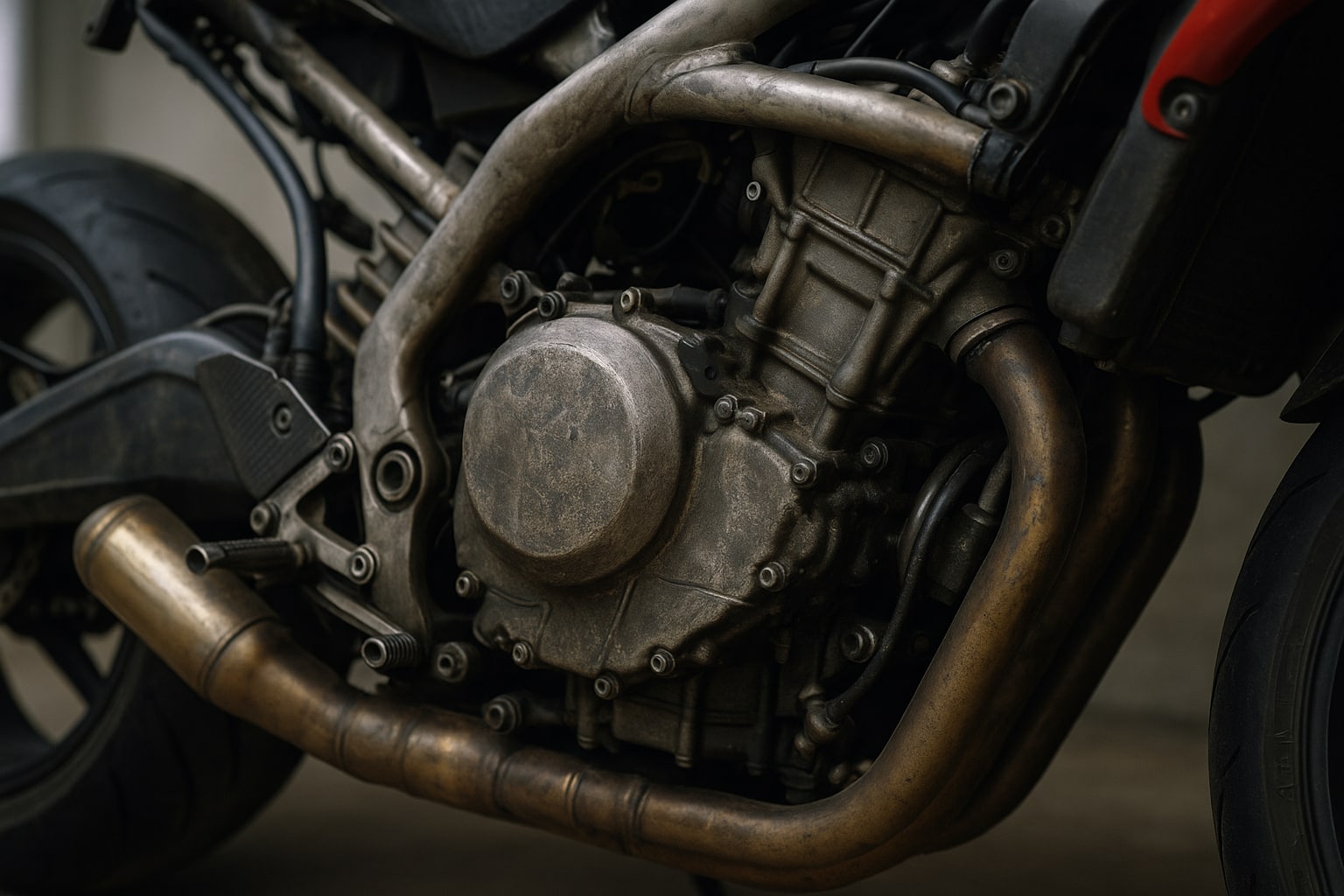
Twenty thousand kilometres is nothing for a car, but on a 999 cc superbike producing nearly 210 hp it is a good barometer. The BMW S 1000 RR has been carving out a place among the benchmark sportbikes since 2009 and, with the current generation (ShiftCam engine), there are now enough units on the road in Spain to talk about reliability with data, not forum legends.
Quick technical specifications of the BMW S 1000 RR
- Displacement: 999 cc, 4 cylinders in line
- Power: 210 hp (154 kW) at 13,750 rpm
- Torque: 113 Nm at 11,000 rpm
- Weight ready to ride: 197 kg (with M Package it drops to 193.5 kg)
- Seat height: 824 mm
- Fuel tank: 16.5 l
- Licence: A (no A2-homologated version available)
- WLTP fuel consumption: 6.4 l/100 km — estimated real-world: 6.8-7.5 l/100 km on the road, up to 9-10 on track
- RRP in Spain: from 21,150 € (base S 1000 RR, August 2026 list price)
The ShiftCam engine at 20,000 km
Here is the good news: the S 1000 RR’s engine block is among the most robust in its segment. The ShiftCam variable intake system, which in theory added a layer of complexity, is not showing any serious problems. Official BMW Motorrad workshops report a very low failure rate in the valve train below 40,000 km.
What is worth keeping an eye on:
- Oil consumption: it is normal for it to take between 200 and 400 ml every 5,000 km, especially if you ride it hard. This is not a fault; it is a high-performance engine with tight tolerances.
- Crankshaft position sensor: some 2020-2021 units have suffered intermittent ignition faults. Covered under warranty in most cases.
- Clutch cover gasket: occasional sweating, without actually leaking. It is sorted at a service.
Chassis, suspension and brakes: what holds up well
The Flex Frame chassis and the swingarm have no structural problems. The suspension depends a great deal on the version:
- The base RR’s Marzocchi fork holds up well at 20,000 km, although a fork service at 15,000-20,000 km (oil change and seals) is advisable if you do track days. Cost: 250-350 €.
- The M Package’s semi-active DDC is more robust under intensive use, but repairs are expensive if something fails: a DDC rear shock costs around 1,400-1,800 € as an official spare part.
The Hayes/Nissin brakes with 320 mm discs give no complaints. Pads last between 12,000 and 18,000 km depending on use; the discs usually last well up to 30,000 km.
Electronics: the part that causes the most anxiety
And with good reason. The S 1000 RR features a 6-axis IMU, cornering ABS Pro, DTC, Wheelie Control, riding modes (Rain, Road, Dynamic, Race and configurable Race Pro), bidirectional Pro quickshifter as standard and a 6.5″ TFT with connectivity. All standard since the 2023 update.
Faults most frequently reported on units with 15,000-25,000 km:
- TFT that switches off or flickers: usually due to a loose connector or a pending update. Free reflash at the dealership.
- Lean angle sensor (IMU): isolated cases, corrected under warranty.
- Quickshifter Pro: loses its feel with use. It is not a fault, just wear on the sensor. Replacement: 180-220 €.
The cruise control (optional on the base model, standard on the M) has not given any problems.
Consumables and maintenance: real figures
The official BMW intervals are:
- First service: 1,000 km (around 250-320 €)
- Periodic services: every 10,000 km or 1 year
- Valves: check at 20,000 km (this hurts: 600-900 € if adjustment is needed)
- Spark plugs: every 20,000 km (4 units, around 90 € in spare parts)
- Brake fluid: every 2 years
- Chain, sprockets and drive set: between 15,000 and 22,000 km depending on care (complete kit: 250-350 €)
Estimated total maintenance cost over 20,000 km, including consumables and the two major services: between 1,400 and 1,900 € at an official dealer network. At a specialist multi-brand workshop you can save 25-30%, but you lose the BMW service history, which later matters at resale.
Depreciation and resale
A well-maintained 2022 S 1000 RR with 20,000 km sells for between 15,500 and 17,500 € on the Spanish market. Depreciation is around 30-35% over three years, better than many Italian rivals. If the premium segment interests you, also take a look at our head-to-head between the BMW S 1000 R and the Ducati Streetfighter V4 S, which share a lot of DNA with the RR.
Direct rivals
- Ducati Panigale V4 S: more character, more maintenance, valve check every 24,000 km but more expensive (1,200+ €).
- Aprilia RSV4 Factory: electronics on a par, but reliability slightly behind according to workshop data.
- Kawasaki ZX-10R: much cheaper to maintain, less electronics, a different concept.
Verdict: does the S 1000 RR stand the test of time?
Yes, and considerably better than its specification sheet might suggest. It makes sense for the rider who covers mixed mileage (road and the occasional track day), sticks to the service intervals and values standard electronics. It also suits buyers of a used bike with a BMW service history: it is one of the few superbikes you can consider with 30,000 km on the clock without breaking into a cold sweat.
It does not make sense for someone who will use it as an urban daily (harsh ergonomics, heat on the legs), for the rider who does intensive track work every week (where the Panigale or RSV4 have a more performance-oriented spares ecosystem), or for anyone who plans to maintain it outside the official network without losing resale value.
The 20,000 km show that the S 1000 RR is a German superbike in the literal sense: expensive to buy, expensive to maintain if something major fails, but reasonably predictable. And in this segment, that is already a lot.
Technical data: official BMW Motorrad Spain website (August 2026). Maintenance costs: consulted three official dealers and two specialist workshops in Madrid and Barcelona.

0 comments · Comment