How much does a motorcycle MOT cost and how often does it need to be done
Prices, deadlines, paperwork and fines for the motorcycle ITV in Spain in 2026. We explain how often it needs to be done depending on age and what happens if you skip the appointment.
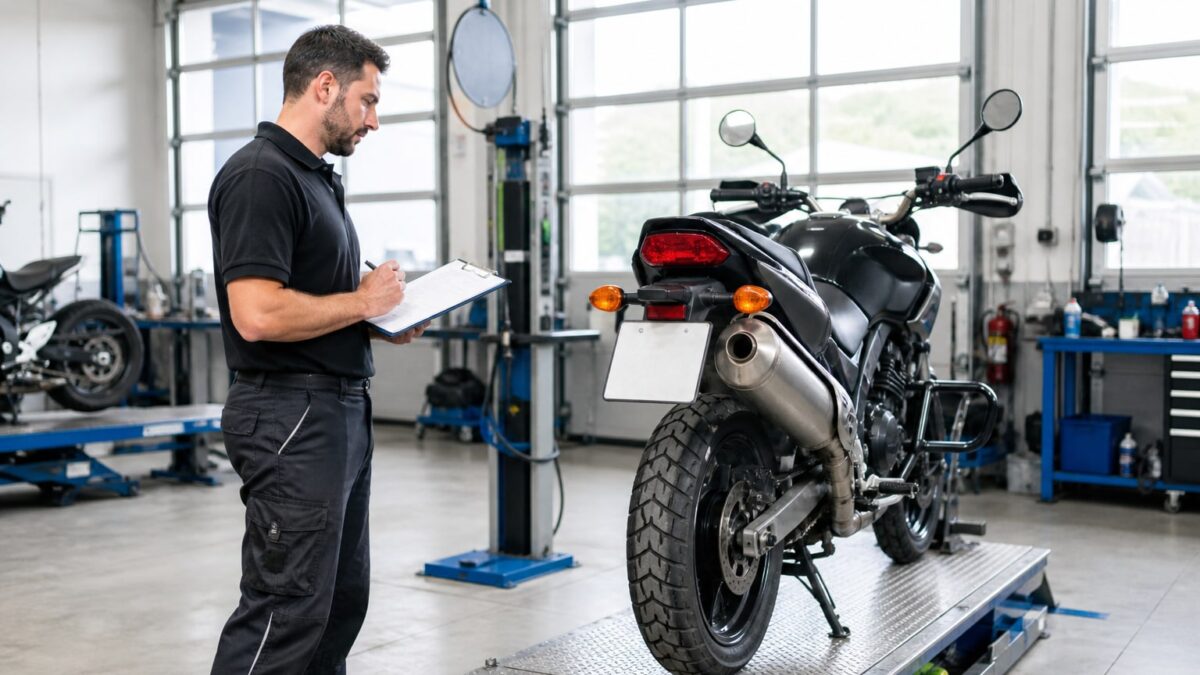
The ITV is one of those procedures that all motorcyclists postpone until the last weekend of the month. And yet it is one of the cheapest and quickest items on the calendar: you go in, they check lights, brakes, noise and emissions, and in twenty minutes you’re out. The problem comes when the date slips by, when you get stopped with an expired sticker or when you turn up at the station without the correct paperwork. Let’s clear up prices, deadlines and the fine print so you don’t get any nasty surprises.
Quick summary: motorcycle ITV in Spain in 2026
Before going into detail, here is the general overview worth keeping in mind.
| Concept | Detail |
|---|---|
| Approximate motorcycle ITV price | €15 – €30 (depending on region) |
| Moped (up to 50 cc) | First ITV at 3 years, then every 2 |
| Motorcycle > 125 cc | First ITV at 4 years, then every 2 |
| Motorcycle over 10 years old | Every 2 years (follows the cycle) |
| Fine for not passing it | €200 (reduced to €100 for early payment) |
| Mandatory documentation | Registration certificate, technical sheet, valid insurance |
These are reference figures for all of Spain in 2026. The final price depends on the autonomous community and on whether the station is public or concessioned.
How much a motorcycle ITV costs in 2026
The motorcycle ITV price is not uniform: each autonomous community sets its own rate and, in addition, the traffic fee (around €4.20) must be added, along with VAT if it is not included. The real range you’ll find in 2026 runs from the cheapest €15 in Andalusia or the Canary Islands up to €28–30 in Catalonia, the Balearic Islands or the Basque Country.
As a rough guide by region:
- Madrid: around €22–24.
- Catalonia: about €28–30, among the most expensive.
- Andalusia: between €15 and €18, among the cheapest.
- Valencian Community: around €20–22.
- Galicia and Castile and León: €18–22.
- Basque Country and Navarre: €25–28.
If your motorcycle is electric, the motorcycle ITV rate 2026 is usually somewhat lower because there is no emissions inspection. Some stations apply a 10–15% discount directly at the till.
How often a motorcycle needs its ITV
Here is the most frequently asked question. The motorcycle ITV frequency depends on the age of the vehicle since its first registration, not from when you bought it second-hand.
- Motorcycle over 125 cc: exempt for the first 4 years. From the fifth year, every 2 years.
- Motorcycle up to 125 cc: same criteria, exempt for 4 years and then biennial.
- Moped ITV (up to 50 cc): exempt for 3 years and then every 2.
- Motorcycles over 10, 20 or 30 years old: follow the biennial cycle; they do not switch to annual as some cars once did.
If your motorcycle is a classic with historic registration, the rules change: inspection becomes every 4 years for vehicles over 40 years old approved as historic.
What paperwork to bring to the ITV
It’s not unusual to see someone turning back at the station door for forgetting a document. The essential motorcycle ITV documentation is:
- Registration certificate.
- Technical sheet (ITV card) with the latest inspections stamped.
- Receipt of valid insurance (or the insurer’s certificate).
- Owner’s ID card, or authorisation if someone else is bringing it.
If you have carried out any modifications (approved exhaust, handlebars, seat, steering head, switch to LED headlight…), bring the technical project and the workshop certificate. Without that, they won’t stamp it.
What the inspection checks
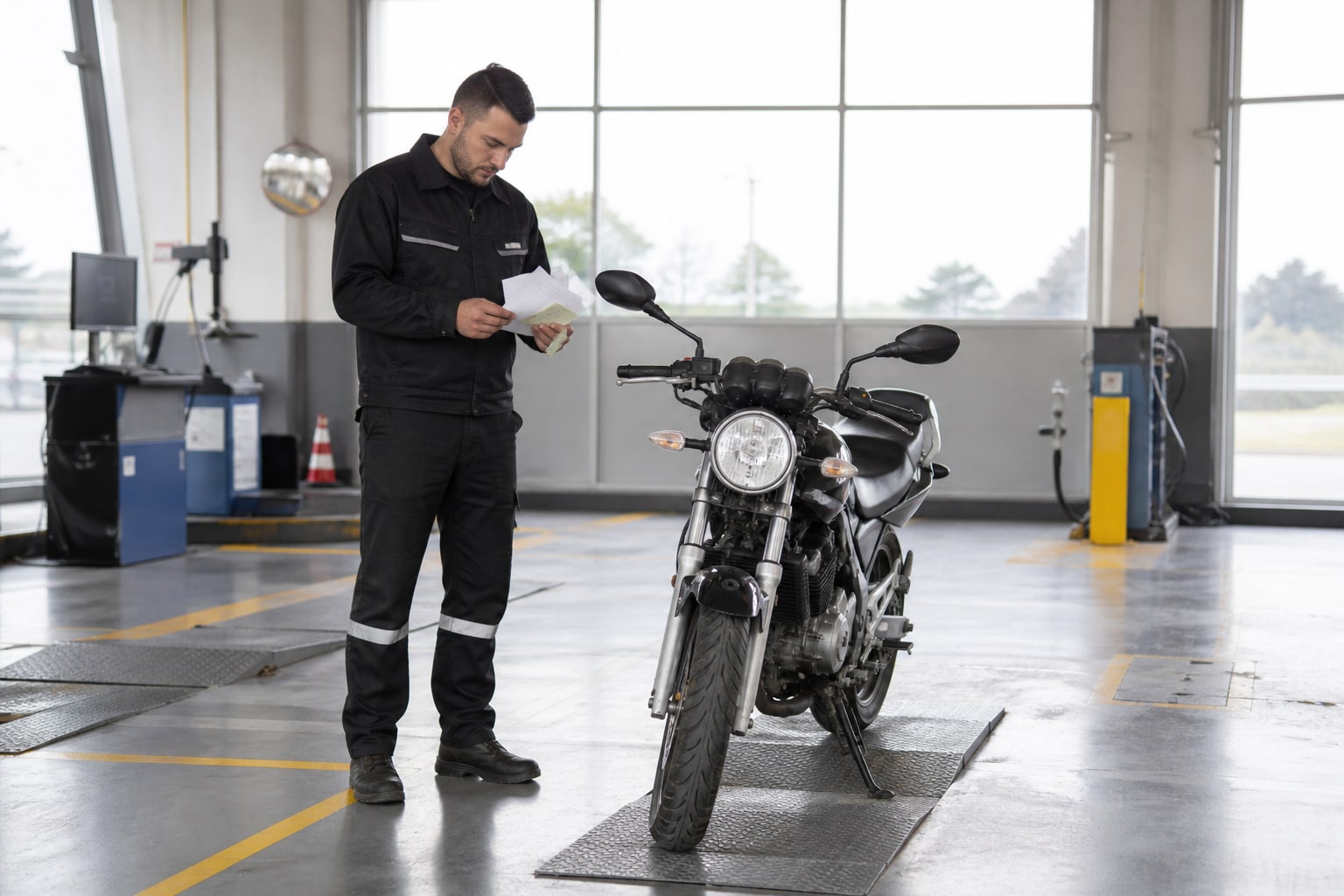
The test lasts between 15 and 25 minutes. The technician checks:
- Identification: frame number, registration plate and consistency with the technical sheet.
- Lights: dipped and main beam, indicators, position lights, brake light and number plate light.
- Brakes: on the roller bench, front and rear separately.
- Steering and suspension: play in the steering head bearings and swingarm.
- Tyres: minimum tread of 1.6 mm and no cuts or deformations.
- Emissions: CO and HC on petrol motorcycles.
- Noise: measurement with a sound level meter at stabilised rpm.
- Frame and transmission: leaks, chain tension, condition of the exhaust.
The most common failure is still exhaust noise (non-approved modifications) and blown bulbs. Check them the night before and you’ll save yourself a return trip.
Result: favourable, unfavourable or negative
After the inspection there are three possible outcomes:
- Favourable: you get the sticker and back on the road. The next one is in two years.
- Unfavourable: serious defects. You may ride only to go to the workshop and return to pass it within two months. If you return to the same station in less than two months, the second inspection usually costs half or is subsidised.
- Negative: very serious defects (petrol leak, brakes not working). You can’t ride it away; it has to be taken away by tow truck.
Fine for failing the motorcycle ITV
The fine for failing the motorcycle ITV is €200, reduced to €100 if you pay within the first 20 days. It carries no loss of points, but it does have significant consequences:
- If you have an accident with an expired ITV, the insurer may claim back from you and stop covering your own damages.
- Riding with an unfavourable ITV without going to the workshop raises the fine to €500.
- Riding with a negative ITV costs another €500 and, in addition, the vehicle is impounded.
And yes, the Guardia Civil and local police read the sticker on the mudguard at a glance at checkpoints. They also detect it via the registration plate in automatic readers.
Tips to avoid failing at the appointment
- Book an appointment online: turning up without one can mean 1–2 hours of waiting.
- Go with an almost empty tank if you’re having the emissions and noise check; it vibrates less and measures better.
- Clean the frame so the number can be read clearly.
- Carry a spare bulb in your bag in case one blows during the test.
- If you’ve fitted a non-approved exhaust, refit the original before going. There are no shortcuts.
If you’re wading through motorcycle paperwork in general, you may also be interested in our guide on what licence you need for a 125 cc motorcycle in 2026, as it’s usually the other recurring question when someone revives a motorcycle that’s been parked in the garage for years.
Verdict
The motorcycle ITV in Spain remains cheap, quick and biennial once the first 4 years (3 for mopeds) have passed. For an average of €20 and twenty minutes of your time, you avoid a €200 fine and, above all, make sure the motorcycle is in minimum roadworthy condition. Who benefits from keeping the date right: everyone. Who gains from skipping it: absolutely no one, because the saving is ridiculous and the risk — especially with regard to insurance in the event of a claim — is far too high. Put the sticker date in your phone and forget about it.
0 comments · Comment