Everything you need to know about the A2 motorcycle license
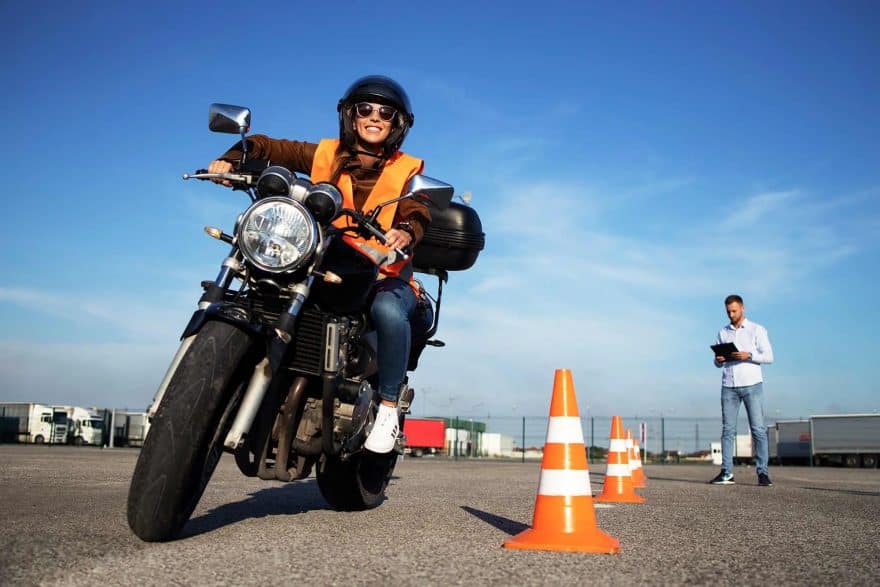
In the exciting world of two-wheeled vehicles, holding the right license is essential to enjoy the freedom a motorcycle offers without putting your safety or that of others at risk. In this article, we will explore in depth what the A2 license is, who can apply for it, what the requirements are, and the benefits of obtaining it. In addition, we will offer practical tips for those interested in obtaining an A2 license and starting their adventure on two wheels.
What is the A2 license?
The A2 license is a driving license designed for riders who wish to ride medium-displacement motorcycles. This license allows you to ride vehicles that do not exceed 35 kW of power and whose power-to-weight ratio does not exceed certain established limits. Its main purpose is to offer an intermediate option between the A1 license, intended for low-displacement motorcycles, and the A license, which authorizes riding high-powered motorcycles. Thanks to this classification, the A2 license has become a popular choice for young people and adults looking for a balance between performance and safety.
Who can obtain the A2 license?
The process of obtaining this license is aimed at people over 18 years of age. It is important to keep in mind that, although the minimum age is accessible, the training process is rigorous. Applicants must pass a series of theoretical and practical exams that guarantee not only knowledge of traffic rules but also the ability to ride a motorcycle safely. Training includes theory classes, practice on closed circuits, and tests on public roads, all aimed at developing responsible and conscious riding.
Process for acquiring the necessary training
Before enrolling in a driving school, it is vital to know the details of the training process. Instruction is structured in two phases: a theoretical one and a practical one. During the theoretical phase, topics such as road regulations, basic motorcycle mechanics, riding techniques, and accident prevention are covered. Later, in the practical phase, students must demonstrate their skills in controlled maneuvers and under real traffic conditions.
In addition, many driving schools offer specialized courses that combine simulations and circuit practice, which allows students to gain confidence and experience before facing public roads. These courses are designed to minimize risks and prepare future riders in the best possible way.
Advantages of obtaining the A2 license
Holding the A2 license has multiple benefits. First, it allows access to a wide range of motorcycles that offer a perfect balance between power and manageability, which is ideal for those starting out in motorcycling. Motorcycles authorized for this license are usually more economical in terms of fuel consumption and maintenance, which represents considerable savings over time.
Another important aspect is the added value of the training received. The education you gain while preparing for the A2 license provides you with essential knowledge about mechanics, road safety, and defensive riding, skills that are useful not only in daily riding but also in emergency situations.
Likewise, having the A2 license opens the door to future upgrades. In many cases, after a period of experience, riders can opt to move up a category and access higher-powered motorcycles, which expands their possibilities and the pleasure of riding.
Tips for safe riding
Once you have completed the process and obtained your license, it is crucial to maintain a responsible attitude on the road. Some practical tips include:
- Use of proper equipment: Always wear an approved helmet, gloves, jacket, and boots designed for motorcycle riding. This equipment is essential to minimize injuries in the event of an accident.
- Regular maintenance: Periodically check the motorcycle to make sure all components are working properly. Good maintenance is key to safety and performance.
- Continuous training: Riding is a skill that improves over time. Taking advanced or defensive riding courses can significantly improve your ability to react to unexpected situations.
- Respect for traffic rules: Obeying signs and speed limits, keeping a safe distance, and staying alert to environmental conditions are attitudes that reinforce safety on every journey.